Tea 101: Lesson 1 Black Tea for Beginners
Lesson 1 of 4: What Makes Black Tea Different?
A 5-minute farm-grown tea lesson from Clemson Tea Farm.
Follow along with us at Clemson Tea Farm through our first black tea trial and learn the simple beginner answer to what makes black tea different from green, white, and oolong tea.
Quick Answer
What makes black tea different from other teas?
Black tea is made from Camellia sinensis, the same plant used for green tea, white tea, and oolong tea.
What makes black tea different is how the leaf is processed after harvest. Black tea is allowed to oxidize more fully, which helps create its darker color, fuller body, and richer flavor.
That’s the simple answer.
Now let’s walk through what that looked like during our first Clemson Tea Farm black tea trial.
Welcome to Our First Black Tea Lesson
If you are looking for black tea for beginners, pull up a chair at our farm table.
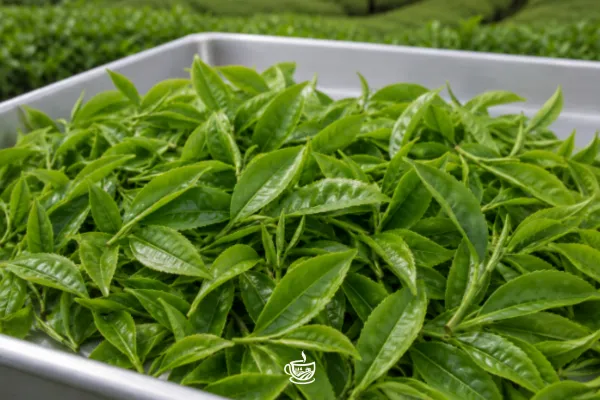
We’re starting with a handful of fresh Camellia sinensis leaves and one simple question:
What actually makes black tea different?
Here is the beginner answer:
Black tea is not a different plant. It is a different path the tea leaf takes after harvest.
Black tea, green tea, white tea, and oolong all begin with Camellia sinensis. The difference is what happens next.
Same leaf family. Different road home.
At Clemson Tea Farm, our first black tea trial was not a grand announcement wrapped in ribbon. It was fresh leaves, careful hands, perforated trays, a small roller, warm drying equipment, and the humbling understanding that tea will teach you faster than any textbook if you let it.
At Clemson Tea Farm, a trial batch of black tea is less like a performance and more like a conversation.
The leaf speaks first.
We try not to interrupt too much.
Why This Matters
If you are new to Tea 101, understanding this one idea makes the rest of tea much easier to understand.
Many people assume black tea, green tea, white tea, and oolong must come from different plants.
They do not.
They all begin with Camellia sinensis.
Once you understand that the difference is mainly in processing, tea suddenly starts making a lot more sense.
What to Know First
Before we go any further, here are three simple Tea 101 ideas to keep in mind.
Tea Is the Plant
At Clemson Tea Farm, tea means Camellia sinensis.
Mint, lemon balm, hibiscus, chamomile, and other herbs make wonderful herbal infusions or tisanes, but true tea comes from Camellia sinensis.
Black Tea Is a Process
The five beginner words to remember are:
Harvest → Wither → Roll → Oxidize → Dry
Trial Batches Are Teachers
A small batch helps us understand what the leaf, weather, timing, and handling are doing together with our leaves from our land.
And sometimes, not everything behaves the way the book says it should.
That is why we take notes.
So What Makes Black Tea “Black Tea”?
Here is the short version:
Black tea is shaped by oxidation.
Oxidation is the change that happens after the leaf is bruised or rolled and exposed to oxygen.
It helps the leaf move from fresh green character toward the darker color, deeper aroma, and fuller flavor we associate with black tea.
That is the big beginner's takeaway.
We will talk much more about withering, rolling, oxidation, drying, and tasting in the next lessons.
For today, just remember this:
Black tea is not black because it came from a black tea plant. It is black because of how the leaf was handled after harvest.
The Five Beginner Steps
For Tea 101, think of black tea as a simple farm-to-cup path:
Harvest → Wither → Roll → Oxidize → Dry → Taste
1. Harvest the Leaf
Choose tender Camellia sinensis growth, ideally when the plant is hydrated and the morning heat has not started bossing everybody around yet.
For a good tea pluck, we are usually looking for a bud and two tender leaves.
That is the pretty answer.
The real farm answer is this: you also have to pay attention to the plant in front of you, the weather, the timing, and what the leaf is actually giving you that day.
2. Wither the Leaf
Spread the leaves in a thin layer so they soften and lose some moisture.
The goal is a pliable leaf that can be rolled without shredding into a sulk.
In our first trial, this meant fresh leaves spread on perforated trays, checked again and again as they changed from crisp and green toward something softer and more workable.
3. Roll the Leaf
Roll by hand or with a small roller to bruise the leaf cells.
This opens the door for oxidation.
Rolling is one of those steps that sounds simple until the leaf starts teaching you otherwise.
Too little rolling, and the leaf may not open up enough.
Too much rough handling, and the leaf can turn into a mess.
This is where a small trial batch gives you very honest feedback.
4. Watch the Oxidation
Let the rolled leaf sit and watch it closely.
This is where the color starts changing and the aroma begins to tell on itself.
The fresh green scent may begin moving toward something deeper, warmer, fruitier, maltier, or more tea-like.
This is where good notes become important:
Time
Temperature
Humidity
Aroma
Leaf color
Oxidation is not a moment where you walk away and hope for the best.
It is a “check it, smell it, look at it, write it down, and learn something” kind of step.
5. Dry and Taste
Dry the tea all the way through so the batch is safe to rest, store, and taste later.
Then brew a small cup and write down the truth:
Color
Aroma
Body
Sweetness
Bitterness
Finish
Ideas for the next batch
Pro Tip: Do not trust memory with a trial batch.
Memory is a charming liar.
Write everything down.
Nerdy Tangent
Here is your tiny tea geek moment.
During oxidation, compounds inside the tea leaf begin to change.
Two important groups of compounds in black tea are called theaflavins and thearubigins.
No worries. There is not a quiz.
Theaflavins contribute brightness and briskness.
Thearubigins contribute deeper color and body.
In plain farm language:
Oxidation helps the leaf stop acting like a fresh green leaf and start becoming black tea.
Tiny leaf.
Big personality.
What Our First Trial Taught Us
For our first black tea trial at Clemson Tea Farm, we harvested a small batch of fresh tea leaves and began learning how our own farm-grown leaf behaves.
There were fresh leaves, perforated trays, a small roller, warm drying equipment, lots of checking, and plenty of notes.
The smell changed as we worked. The leaf changed as we handled it. And not every part of the batch behaved exactly the way a neat little textbook paragraph might make you expect.
That is why trial batches matter.
At Clemson Tea Farm, our trial notes are farm humility in ink.
They let tomorrow’s batch benefit from today’s “well, that was interesting” moments.
The value of this first trial batch was not that everything went perfectly.
The value was that it showed us what our leaves actually wanted to do when we asked them to become black tea.
That’s where learning begins.
Pro Tip for Beginner Tea Learners
When learning tea, do not rush to memorize every processing step at once.
Start with the big ideas:
True tea comes from Camellia sinensis
Black tea is different because of processing
Oxidation is the main black tea transformation
Once those ideas make sense, the rest of the process becomes much easier to understand.
You do not have to become a tea scientist in one sitting.
Just start with the leaf.
The Big Takeaway
Black tea is not a different plant.
It is Camellia sinensis guided through a different process: withering, rolling, oxidation, drying, and honest tasting.
At Clemson Tea Farm, our first trial batch helped us begin seeing that process in real time — from fresh leaf toward finished cup.
This first lesson is the doorway.
Harvest → Wither → Roll → Oxidize → Dry → Taste → Ritual
Next, we will slow down and look at the first step after harvest: withering.
Next in Tea 101: Black Tea for Beginners
Lesson 2 of 4: Why Withering Matters in Black Tea
In the next lesson, we will explore why fresh tea leaves need to soften and lose some moisture before they are ready for rolling.
✅ Wanna bring more farm-to-cup wellness into your life?
Sign up to be the first to purchase our Black Tea when available and receive Clemson Tea Farm updates → Get notified
Follow along with Clemson Tea Farm’s Tea 101: Black Tea for Beginners series as we grow, process, taste, and teach farm-grown tea from our fields in South Carolina.
Soil to plant. Plant to harvest. Harvest to brew. Brew to taste. Taste to ritual.
That's the quiet line running through every batch.
Wanna Read More?
Tea 101: Black Tea for Beginners — Lesson 2 of 4: Why Withering Matters in Black Tea
Tea 101: Cornerstone Bonus — Why Premium Farm-Grown Tea Takes Time
Wanna Geek Out?
If you want to go deeper into what makes black tea different, these references are helpful:
World Green Tea Association — Difference Between Black Tea, Green Tea, and Oolong Tea A beginner-friendly explanation of how tea types differ by oxidation level.
University of Hawaiʻi — Home-Processing Black and Green Tea
A practical guide to small-scale black and green tea processing using Camellia sinensis leaves.
National Library of Medicine / PMC — Enzymatic Oxidation of Tea Catechins and Its Mechanism A deeper science reference for readers who want to understand catechins, enzymes, theaflavins, and thearubigins.
Wanna Keep Learning Black Tea from the Leaf Up?
Follow Clemson Tea Farm’s Tea 101: Black Tea for Beginners series as we continue from fresh leaf to finished cup.
Soil to plant… Plant to harvest… Harvest to wither… Wither to roll… Roll to oxidize…
Step by step, the leaf teaches.
