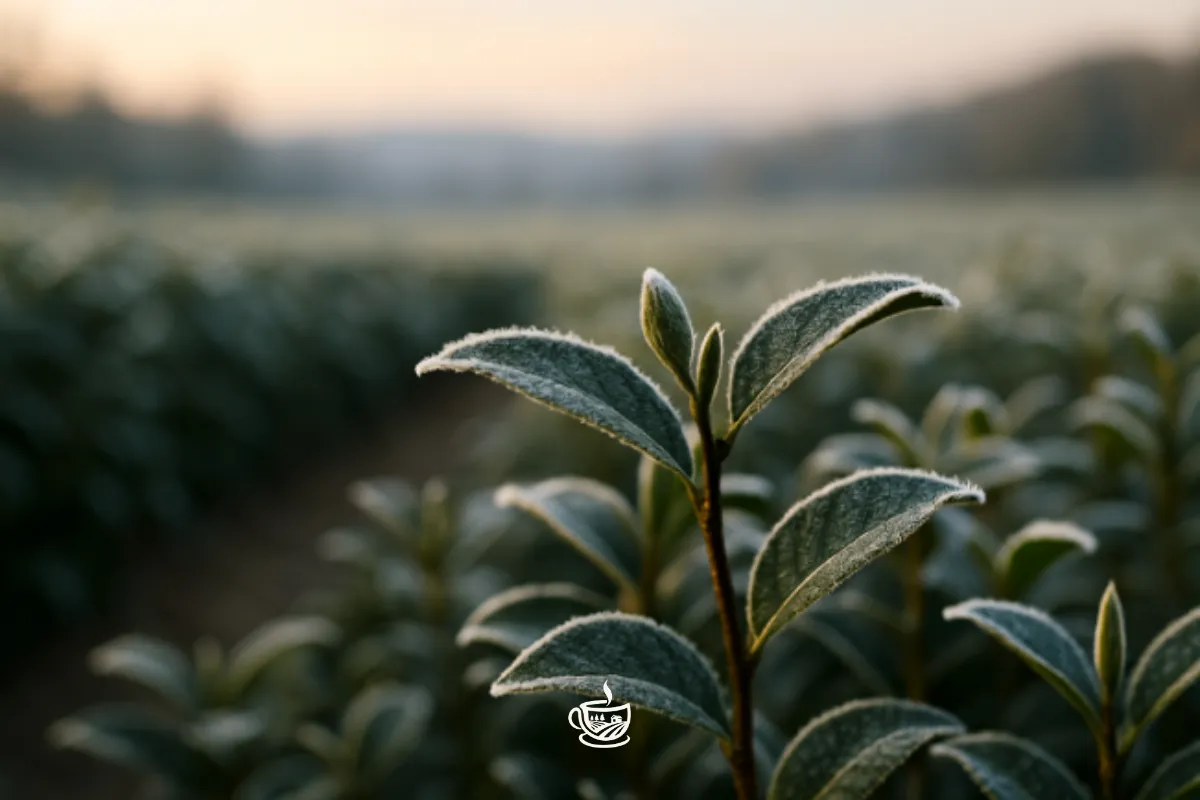
December Dormancy Isn’t Laziness—It’s Strategy: Wintering with Tea Plants
Dormancy isn’t downtime—your tea plants are busy storing sugars, strengthening buds, and preparing Clemson Tea Farm’s Snow Tea™ for its winter sweetness.
Dormancy, not Laziness
December looks like “nothing is happening,” but Camellia sinensis is running one of the most elegant strategies in the plant world.
It’s not resting. It’s reorganizing.
And what it’s doing in this cold, quiet window is exactly what makes Clemson Tea Farm (Winter-harvested green tea) Snow Tea™ special.
What the Plant Is Really Doing in December
As temperatures drop, tea plants shift their priorities:
Carbohydrates and metabolites move into the leaves. This is the plant’s winter shield—those sugars act like natural antifreeze, protecting cells from freezing damage.
Energy is redirected to the roots. Carbohydrates stored below ground become spring’s fuel tank.
The first hints of next year’s buds begin forming. You can’t see it yet, but spring flush is already quietly on a future blueprint.
Growth shuts down to reduce moisture loss. Dormancy is water-wise and freeze-smart.
Dormancy isn’t laziness. It’s a biochemical strategy.
Why These Sugars Matter: The Secret to Snow Tea™
Winter leaves are different—chemically, structurally, spiritually (if tea can be spiritual… and we think it can).
Because metabolites and sugars concentrate in the leaf:
Bitterness drops.
Sweetness and nuttiness increase.
A smoother, softer cup emerges—what you taste in our Snow Tea™.
This is why our winter harvested green tea has a gentle sweetness that spring teas can’t replicate.
It’s carbohydrate loading, plant-style.
Why December Is Essential for Tea Plant Health
December gives Camellia sinensis:
A chill-hour reset
The plant literally counts cold hours to reboot its system.
A fungal and pest slowdown
Cold = fewer problems.
A root-building season
Less leaf activity = more underground strength.
A visible snapshot of plant structure
Perfect for observing shape and planning February pruning.
What Growers Should—and Should NOT—Do Now
Let the plant be dormant. No fertilizing, no forcing growth.
Water sparingly. Cool and lightly moist beats soggy every time, especially in our southern clay soil.
Keep mulch tidy but not heavy. A measured blanket, not a winter coat.. you know what I’m talk’n about.
Walk your rows, take notes, observe. Winter is for learning the plant’s shape, not fixing it.
Save pruning for late winter. December is planning season, not cutting season.
Dormancy concentrates sugars, strengthens roots, builds buds, and sets the stage for Snow Tea’s winter sweetness—December is where the quiet brilliance happens.
Want to bring more farm-to-cup wellness into your life?
Be the first to hear about tea classes, volunteer days, or WWOOF opportunities at Clemson Tea Farm. Sign up for our newsletter!
Wanna Read More?
Snow Tea™: Why Winter Plucking Works (Coming soon)
Should You Mulch Tea? The Soil-Health Edition (Coming soon)
Your Tea Plant’s Spring Calendar (Coming Soon)
