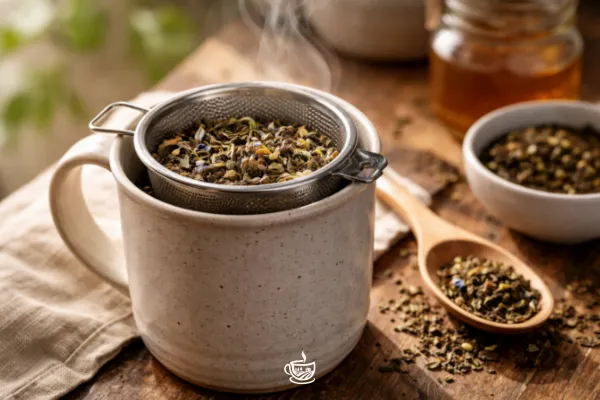
Loose Leaf vs Tea Bags: What Actually Matters (and What Doesn’t)
Loose leaf vs tea bags—what really impacts flavor, freshness, and waste (plus a printable starter guide).
Why this matters
Tea bags are convenient. They’re also the reason half of us think tea is supposed to taste like warm beige water. (No shame. I’ve been there.)
Spring is the season of fresh starts—garden beds, greenhouse benches, and yes… that dusty tea cabinet. If you’re going to drink tea daily, let’s make it taste like something you’d actually miss when it’s gone.
During tasting times at Clemson Tea Farm, we notice the difference instantly—whole leaves smell alive; stale dust smells like the back of the pantry.
The real difference isn’t “bag vs. loose”
What actually matters comes down to three things:
Leaf quality + freshness (whole leaf holds flavor longer than tiny particles).
Room to unfurl (tea needs space; cramped leaves can brew flat or bitter).
Water + time (the fastest way to ruin great tea is boiling water + forgetfulness).
When tea bags are absolutely fine
If your life is chaotic (hi, welcome), tea bags can still be a solid choice. They shine when you need:
Speed: office kettles, travel mugs, carpool lines.
Consistency: one bag, one cup, no brain math.
Less cleanup: especially when you’re brewing in borrowed kitchens.
Upgrade move: use a bigger mug and pull the bag when it’s done steeping—don’t squeeze it like it owes you money.
When loose leaf wins (fast)
Loose leaf isn’t fancy. It’s just less restricted.
Better aroma + flavor (leaves can expand and release layered compounds).
Often re-steepable (you can get 2–3 infusions from many teas).
Less packaging waste (and used leaves can go to compost).
Transparency: you can actually see what you’re buying.
Nerdy tangent: “dust & fannings” vs whole leaf
Many standard tea bags use smaller grades (often called fannings or dust). Smaller pieces extract quickly—great for a strong, fast cup—but they also have more surface area exposed to oxygen and light. That can speed up staling and degrade delicate compounds during storage.
Translation: cheap bags aren’t automatically evil. They’re just playing on hard mode.
So… which should you buy? A simple decision guide
Decide your priority: flavor, convenience, budget, or low-waste.
If flavor is top priority: go loose leaf + a roomy basket infuser.
If convenience is top priority: choose higher-quality bags (paper or plant-based fibers if possible).
If you’re composting: compost the tea, but confirm the bag material with your local facility.
Dial in your brewing basics: start around 2 g tea per 8 oz (240 mL), then adjust.
Warning: Some tea bags (especially polymer mesh bags) have been shown in studies to release micro/nanoplastics when steeped in hot water. The long-term health significance is still being studied, but loose leaf brewed in stainless steel is a practical way to reduce that potential exposure.
Scripture reflection: “Taste and see…” is a whole vibe for tea. (Psalm 34:8)
Choose the best leaf you can afford, give it room, and mind your water—
your cup will level up whether it starts in a bag or not.
Want to bring more farm-to-cup wellness into your life?
Download the printable PDF — Loose Leaf Starter Guide & join our newsletter for notification about newly harvested tea, tea classes or volunteer days!
Wanna Read More?
Tea 101: Water Temperature Matters
Tea 101: How to Store Tea So It Stays Fresh
What Is True Tea? Camellia sinensis vs. Tisanes
Wanna Geek Out?
Chemosphere (2024) open-access paper on teabag-derived micro/nanoplastics.
Environmental Science & Technology (2019) study on plastic teabags releasing micro/nanoplastics.
Tufts University ‘Ask the Expert’ on loose leaf vs tea bags and catechin stability.
Compost Stewardship Institute guidance on compostable packaging acceptance.
