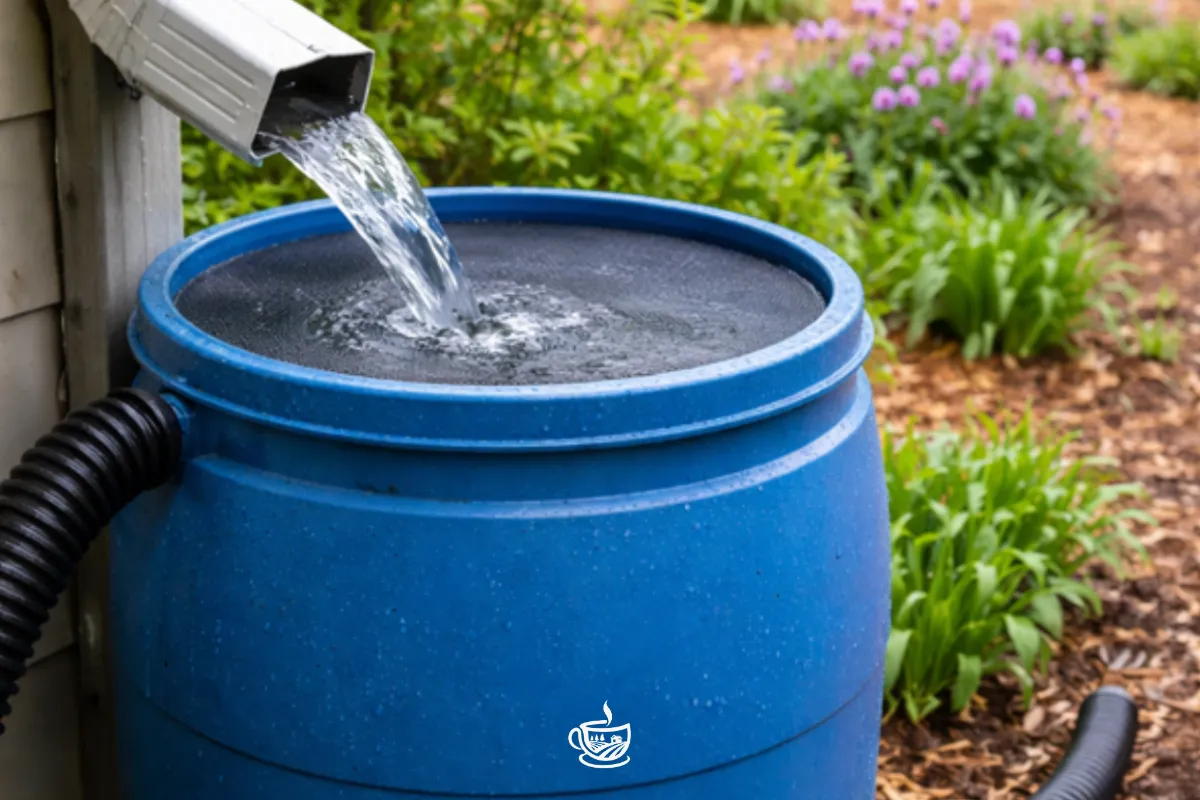
Harvesting Rainwater with Permaculture in Mind
Harvest rainwater the permaculture way—catch, store, and soak it into soil with a simple plan + free printable worksheet.
Why this matters
Rain is free. Your roof is already catching it. And then—because modern life loves chaos—it gets dumped as runoff, taking soil, mulch, and your sanity with it.
Permaculture asks a different question: How do we keep water on the land longer? Not just in a barrel, but in the soil—where roots and microbes do the real work.
At Clemson Tea Farm spring rains can be generous one week and “who’s that?” the next. A good water plan turns moody clouds into consistent support for baby plants, compost, and everything green that’s trying to wake up and grow.
What to know first (before you buy anything)
Water already has a path. Your job is to observe it, then redesign it so it slows down instead of sprinting off your property.
You’re choosing between two wins: store some water (rain barrels/cisterns) and sink the rest (mulch basins, rain gardens, swales, healthy soil).
Start small and strategic: one downspout, one barrel, one overflow bed. Expand after the first few storms teach you what works.
Nerdy tangent (but useful): the “wow” math
Rule of thumb: 1 inch of rain on 1,000 square feet can yield about 623 gallons—before losses from splash, debris, and system efficiency. That’s not a drizzle. That’s the whole plan.
How to harvest rainwater (permaculture-style)
Observe. Stand outside during a rain (yes, like a cheerful weirdo) and watch: Where does water pour? Where does it pool? Where does it erode? What stays dry?
Calculate your catchment. Measure the roof area feeding your chosen downspout. Bigger roof = bigger opportunity. If you don’t want to measure, try this: place a 50–90 gallon barrel under one downspout and see how fast it fills.
Choose your “first best use.” Pick the job your harvested water will do first: new transplants, nursery starts/greenhouse seedlings, mulch basins around shrubs/trees, or compost moisture.
Filter like you mean it. At minimum, use a screen to block leaves and mosquito entry. If you’re watering edible gardens, be thoughtful about roof debris and runoff quality.
Store what you’ll actually use. Rain barrels are great training wheels. Cisterns/large tanks are for when you’re ready to scale. Plan for a safe lid, easy access, and overflow (this is not optional).
Design overflow to “slow, spread, sink.” Send overflow somewhere intentional: a rain garden, a mulched infiltration bed, a series of basins along a slope, or (advanced) a properly designed swale system. The goal is to soak water into soil, not blast it against your foundation.
Stack functions with planting “teams.” Don’t just water plants—build a system where plants help each other need less water. Use living groundcovers as mulch, include deep-rooted companions for structure, and build plant communities that stabilize soil.
First best uses (quick picks):
New transplants (the thirstiest babies)
Nursery starts / greenhouse seedlings
Mulch basins around shrubs/trees
Compost moisture (aim for “wrung-out sponge,” not desert dust)
Warning: Rain barrel water is generally considered non-potable unless it’s properly treated. Please don’t brew your morning tea with barrel water. Your taste buds deserve better—and so does your gut.
Pro tip: Pair overflow with plants that help hold moisture and build soil structure—groundcovers, deep-rooted companions, and pollinator-friendly edges. Plant diversity above ground supports life below ground (and that’s how soil starts acting like a sponge).
Final Steep
Rainwater harvesting isn’t a gadget—it’s a land relationship: catch it, store some, and sink the rest into living soil so your garden (and your future cup) can thrive.
Download Harvesting Rainwater Planning Worksheet
Want to bring more farm-to-cup wellness into your life?
Wanna Read More?
Wanna Geek Out?
Clemson HGIC: Designing for Rain Barrel Success (with sizing math)
EPA: Rainwater Harvesting Practices (green infrastructure toolbox) [PDF]
“The Lord God took the man and put him in the garden… to work it and keep it.” (Genesis 2:15)
— stewardship looks a lot like planning where the water goes.
