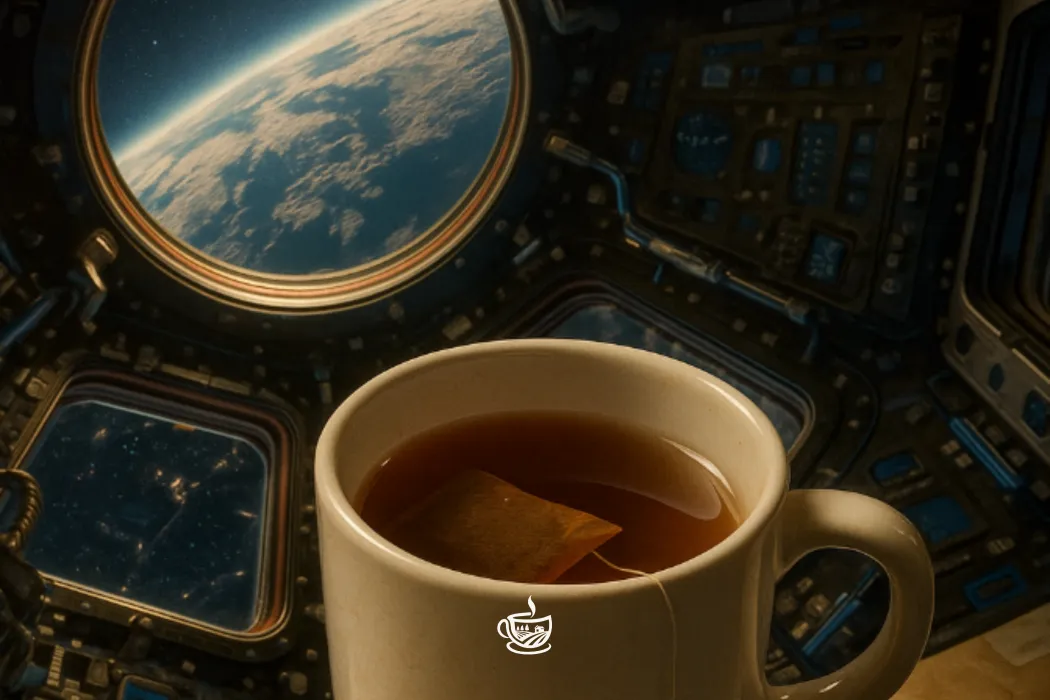
Tea in Space? NASA’s Caffeine Experiments Are Brewing Big Questions
What happens when you take tea out of Earth's gravity? Explore how NASA experiments with tea (and caffeine) in space—and why astronauts might need their daily steep as much as we do.
Intro: One Small Sip for Man…
We know tea comforts, hydrates, and sharpens focus here on Earth—but what happens when you bring a teapot to the stars? NASA’s recent look at caffeine use in orbit suggests tea isn’t just cozy—it’s practical for alertness, hydration, and morale aboard the International Space Station. (Yes, somewhere there is a NASA spreadsheet about caffeine.)
Down here at Clemson Tea Farm, a good cup is what resets my brain between chasing chickens, checking tea rows, and remembering where I put my pruning shears. Now imagine that same reset 250 miles up—with a sunrise every 90 minutes and absolutely no gravity to help your cup behave.
The Challenge: Steeping in Zero Gravity
In space, your tea bag isn’t the only thing floating. With no gravity to pull liquid to the bottom—or even keep it in a cup—astronauts can’t just brew and sip like we do on the porch. Enter the Capillary Beverage “space cup,” a clever little vessel that uses surface tension and geometry so liquid wicks to your lips—no straw, no spills, more aroma. And yes, aroma really matters to flavor.
Picture sloshing tea in the side-by-side when you hit a rut in the South Pasture. Now remove gravity, add millions of dollars of equipment, and you’ll understand why NASA cares about one tidy little cup.
Why Tea? NASA’s Not Just Being Cozy
Caffeine with a side of calm
Tea’s gentler caffeine naturally tags along with an amino acid called L-theanine. Studies suggest this caffeine + L-theanine duo can sharpen attention and task performance, while L-theanine alone may help some folks feel less frazzled. That’s helpful when your “office” is orbiting Earth at 17,500 mph.
Pro tip: At home, try your own “space shift” experiment—swap one afternoon coffee for a cup of green tea for a week and see if your focus feels different without the jitters.
Hydration that actually counts
Contrary to the old myth, moderate black tea hydrates about as well as water. That matters in microgravity, where fluid shifts change how the body handles thirst and water balance. NASA keeps hot and cold water available so crews can rehydrate drink mixes—including tea—without messing up that delicate balance.
Tea/Life/Farm example: On hot South Carolina days, we rotate between water and tea while we weed the tea beds. Same story in space: the form may change (pouch vs. mason jar), but your body still needs steady sips, not dehydration drama.
Morale & ritual
Warm drinks and shared “tea breaks” can become tiny lifelines for crew culture. NASA intentionally leans on communal meals and care packages as part of behavioral-health support during long missions. A floating pouch of tea might sound small—until it’s the closest thing you have to “home.”
Thoughtful tisanes
Tisanes (not “herbal tea”) like ginger, chamomile, and peppermint offer caffeine-free options for evenings in orbit. Evidence for ginger and motion-related nausea is mixed; chamomile’s sleep benefits are mild; peppermint oil (note: oil, not tea) has the best support for easing IBS symptoms. As always, astronauts and earthlings alike should clear anything “medicinal” with a clinician first.
The ISSpresso Machine: Brewing a New Frontier
Built with the Italian Space Agency, Lavazza, and Argotec, the ISSpresso machine proved that hot beverages in orbit can be more than “barely drinkable.” Crews can brew tea, coffee, or even broth into standard drink bags—and during testing, pair the machine with those capillary “space cups” for a more normal sipping experience. Think of it as the space station’s version of the farmhouse electric kettle: small appliance, big comfort.
Pro tip: Want to turn this into a STEM moment at home or in your homeschool? Have kids compare how aroma changes when they drink from an open mug vs. a travel tumbler. Then show them a picture of the space cup and ask how they think it changes the smell and taste in microgravity.
Final Steep: Earth to Orbit, One Cup at a Time
From emperors to explorers, tea has always bridged the body and spirit. On the ISS, it fuels focus, steadies nerves, and delivers a floating taste of home in a place where almost nothing feels “normal.”
“When I consider your heavens, the work of your fingers…” — Psalm 8:3–4
Curious about tea’s future among the stars? Sign up for our newsletter or send us an email to get your download!
Wanna Read More?
Wanna REALLY Geek Out?
A Zero-Gravity Cup for Drinking Beverages in Microgravity PDF
RCTs: black tea hydrates ~like water; beverage hydration index.
