Why Your Tea Tastes Bitter and How to Fix It
Bitter tea? Fix it fast with the right water temp, steep time, and leaf ratio—plus a printable checklist for better tea every time.
Why this matters
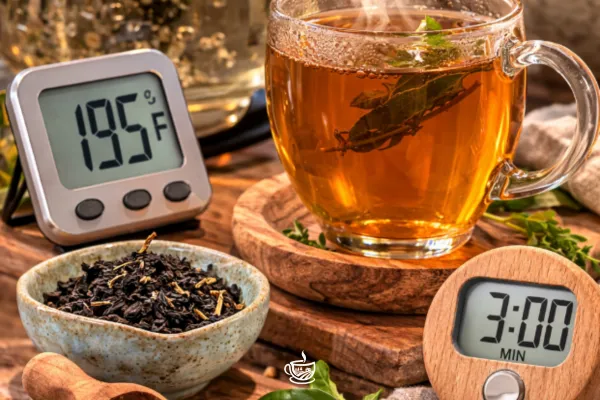
Bitterness isn’t a personality trait your tea developed overnight. It’s usually just chemistry + impatience + slightly-too-hot water.
Here’s what’s happening: tea leaves (Camellia sinensis) contain polyphenols (including catechins) and caffeine, and hotter water + longer steeping = faster, stronger extraction. That’s great when you want bold. It’s not great when you want “fresh and floral” but end up with “angry and chewy.” Research shows brewing conditions (time and temperature) significantly change what ends up in the cup—including catechins and caffeine—so bitterness is often just over-extraction in disguise.
At Clemson Tea Farm, we don’t blame the leaf first—we check the kettle. Nine times out of ten, the “bad tea” was just brewed like it owed somebody money.
What to know first
Before you start adjusting everything like a caffeinated scientist, do this quick reset:
Bitterness tastes sharp and harsh (back of tongue).
Astringency feels drying (like your mouth is wearing a wool sweater).
You can have both—especially if you used very hot water and forgot a timer existed.
Also: “tea” = Camellia sinensis. If you’re brewing chamomile, peppermint, rooibos, etc., that’s a tisane or herbal infusion (still delicious, just not technically tea and they have different brewing parameters).
Nerdy tangent
There’s even an international standard used for sensory testing of tea (ISO 3103) that specifies a very controlled method (including boiling water and set brew times) to keep tastings consistent. That’s not a “best cup ever” recipe—it’s a lab-style baseline for comparing samples. (Iteh Standards)
Translation: brewing “rules” depend on your goal. Your goal is a cup you actually want to drink.
Why your tea tastes bitter
Most bitter-tea problems come from one (or more) of these:
Water too hot for the tea type
Green teas especially can get harsh when brewed too hot. Many tea organizations recommend cooler water for green than black teas. (tea.co.uk)Steeped too long
Time is an extraction lever. Longer steeps generally pull more of the compounds that read as bitter/astringent.Too much leaf for the water amount
Leaf-to-water ratio turns “pleasantly strong” into “why is this scolding me?”Water quality issues
Minerals and pH can change aroma and flavor; research suggests neutral pH and lower mineral content can be better for brewing green tea, and specific minerals can affect volatile compounds.Broken leaf / tea dust (common in many bags)
Smaller particles extract fast—so they punish long steeps and boiling water.
How to fix it
Start with the Three Dials
Cool the water.
For black teas, near-boiling can work; for green teas, aim cooler (around ~80°C is often recommended). (tea.co.uk)
Shortcut: If your kettle only does “volcano,” boil it, then let it sit 2–3 minutes before pouring.Shorten the steep.
Start low, taste, and creep up in 30-second jumps. Brewing-time changes have measurable effects on extracted compounds—this is the easiest dial to control.Use less leaf (or a bigger mug deserves two bags).
If you’re doubling the tea to “make it stronger,” you’ll often get more bitterness, not more beauty. Increase strength by slightly longer steeping or slightly more leaf—not both at once.
Pro tip: Set a timer on your phone. Thinking “I’ll remember” is how bitter tea happens.
Fix the water, fix the world
If your water smells like chlorine or tastes metallic, filter it.
If your tea tastes flat or weirdly harsh no matter what you do, try brewing the same tea with a different water source (filtered vs. bottled) as a quick experiment. Water composition can meaningfully affect flavor and aroma.
Rescue a bitter cup without dramatic feelings
Dilute with a splash of hot water.
For black tea, a little milk can reduce perceived bitterness.
Turn it into iced tea: pour over ice and add citrus peel (not juice) for lift.
Bitter tea is usually just over-extraction—fix the temperature, watch the clock,
and your leaves will stop yelling at you.
Want to bring more farm-to-cup wellness into your life?
Download the printable PDF: Bitter Tea Fix-It Checklist → Download
Get notified about tea classes, volunteer days, or WWOOF opportunities at Clemson Tea Farm
Join the newsletter for seasonal tea tips, recipes, and behind-the-scenes farm stories →
Wanna Read More? Check out our Clemson Tea Farm Blog
How to brew green tea without bitterness (coming soon)
Wanna Geek Out?
Brewing conditions and catechin/caffeine changes in tea infusions (open-access study): https://pmc.ncbi.nlm.nih.gov/articles/PMC4573099/
Water composition and pH effects on green tea aroma/flavor (open-access study): https://pmc.ncbi.nlm.nih.gov/articles/PMC10192933/
ISO 3103 sensory prep standard for tea (PDF): https://cdn.standards.iteh.ai/samples/73224/79469b30ce154460b38ebb10af5565cf/ISO-3103-2019.pdf
UK Tea & Infusions Association “Perfect Brew” guidance: https://www.tea.co.uk/make-a-perfect-brew
#ClemsonTeaFarm #TeaLeavesAndLifeLessons #GardenToCup #CamelliaSinensis #TeaBrewing #DrinkBetterTea #TeaClasses #WWOOF
