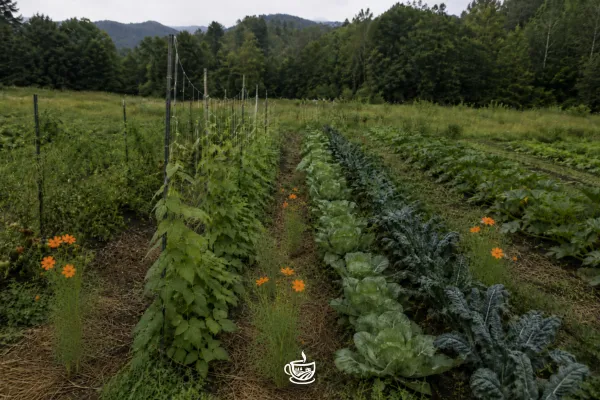
Crop Rotation Basics for Organic Growers
Learn how to rotate vegetable families, interrupt garden pests, balance nutrient demands, and build healthier soil without making the plan complicated.
Every garden bed has a memory.
Plant tomatoes in the same spot year after year, and tomato-loving insects and diseases may remember too. Crop rotation changes the pattern before those problems become comfortable.
At Clemson Tea Farm, we rotate annual vegetables and use guilds around perennial crops. A guild places supportive plants together at the same time. Crop rotation changes which plant families occupy a bed over several seasons. Read more in Garden Guilds 101: Winter Planning for a Smarter Spring (Zone 7b/8a).
What Is Crop Rotation?
Crop rotation means growing different botanical plant families in a bed from one season or year to the next. A useful rotation helps interrupt certain pest and disease cycles, changes the demands placed on the soil, and creates opportunities for legumes, cover crops, and different root systems.
The important phrase is plant families.
Tomatoes, peppers, eggplants, and potatoes are nightshades. Broccoli, cabbage, kale, collards, radishes, and turnips are brassicas. Moving tomatoes out and potatoes in looks like a change, but it is not much of a rotation. Rotating botanical families is one way growers interrupt pest life cycles and alter pest habitat.
Why Crop Rotation Matters
A thoughtful rotation can help:
Reduce some family-specific insects and diseases.
Vary the nutrient demands placed on each bed.
Add root diversity above and below the soil.
Make room for soil-building cover crops.
Reveal what succeeds—and what throws a fit.
Rotation cannot prevent every problem. Insects fly, spores travel, and some diseases have several hosts. It works best alongside sanitation, mulch, compost, resistant varieties, and careful observation.
Know the Main Vegetable Families
Plant family | Common crops |
Nightshades | Tomatoes, peppers, eggplants, potatoes |
Brassicas | Broccoli, cabbage, kale, collards, radishes, turnips |
Legumes | Beans, peas, cowpeas |
Cucurbits | Squash, cucumbers, pumpkins, melons |
Alliums | Onions, garlic, leeks, chives |
Carrot family | Carrots, parsley, celery, dill, fennel |
Aster family | Lettuce, chicory, endive, sunflowers |
Clemson Tea Farm Tip: Write the family beside each crop on your garden map. Let the paper remember what July will erase from your mind.
How to Build a Simple Four-Bed Rotation
Number the beds.
Give each permanent bed or growing area a number.Record what actually grew there.
Gardens are full of substitutions, volunteer plants, and plans that wandered off around May.Group crops by family.
Begin with nightshades, legumes, brassicas, and cucurbits.Move each family forward one bed.
The following growing season (that may be one season later or the next year), move every group to the next bed.Use open seasons to grow soil.
Plant a suitable cover crop rather than leaving soil bare. Cover crops can protect the surface, feed soil life, suppress weeds, and add organic matter. Learn more in Summer Soil Care: Keep It Covered.
Year | Bed 1 | Bed 2 | Bed 3 | Bed 4 |
One | Nightshade | Legumes | Brassicas | Cucurbits |
Two | Cucurbits | Nightshade | Legumes | Brassicas |
Three | Brassicas | Cucurbits | Nightshade | Legumes |
Four | Legumes | Brassicas | Cucurbits | Nightshade |
This is a starting framework, not a garden commandment. Add onions, carrots, lettuce, herbs, and flowers where they fit, but record their families too.
Visual Teaching Moment: Make a Bed History Map
Draw each bed on one sheet of paper. Use one color for each plant family, then mark significant problems: squash bugs, tomato blight, root-knot nematodes, poor drainage, weak growth, or heavy weeds.
That page will reveal where a crop family has stayed too long and where a cover crop may do more good than another round of vegetables.
Pro tip: Photograph the map and keep it on your phone. Soil-covered hands and paper notebooks have a complicated relationship.
What About Tea and Other Perennials?
We do not dig up the Camellia sinensis bushes every year and move them one row to the left.
Tea, fruit trees, berries, asparagus, and perennial herbs remain in place. Around them, we pursue the goals of rotation with diverse groundcovers, seasonal cover crops, compost, mulch, beneficial-insect habitat, sanitation, and guild plantings.
The main crop stays put. The management around it keeps adapting.
Reflection
Crop rotation asks us to think past one harvest.
Roots leave pathways. Plant residue returns organic matter. A repeated crop may welcome repeated trouble (ask me how I know-ugh), while a thoughtful change gives the next planting a cleaner beginning.
Soil → Plant → Harvest → Brew → Taste → Ritual
The cup comes last, but good stewardship begins in the ground.
Healthy crop rotation is not about creating a flawless chart. It is about giving the soil, the plants, and the grower a better next season.
✅ Ready to Plan Your Next Rotation?
Download the Crop Rotation Bed Planner to map your beds, record plant families, and plan the next four growing seasons (Yes, we can plant into the cooler months!)
Wanna Read More?
Wanna Geek Out?
Clemson Cooperative Extension: Planning Your Spring and Summer Garden
USDA National Organic Program: Crop Rotation Practice Standard
#ClemsonTeaFarm #TeaLeavesAndLifeLessons #CropRotation #OrganicGrowing #SoilHealth #CoverCrops #Zone7b #Zone8a #GardenPlanning
