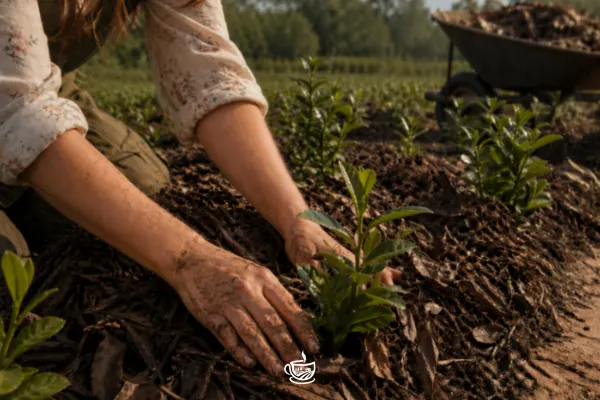
Summer Soil Care: Keep It Covered
Summer soil care starts with cover. Learn how mulch, living roots, and summer cover crops protect soil, tea plants, and your future cup.
Quick Snippet: Why should you keep summer soil covered?
Covered summer soil stays cooler, holds moisture longer, protects soil life from hard rain and harsh sun, and gives Camellia sinensis a steadier root zone. Whether you use mulch, living groundcovers, or quick summer cover crops, the goal is simple: don’t leave the soil bare.
That one idea—keep it covered—sits right at the center of garden-to-cup thinking. Soil supports the plant. The plant gives the harvest. The harvest becomes the brew. The brew becomes taste. And taste becomes ritual*.
You cannot separate the cup from the dirt. Well, technically you can, but the tea will tell on you.
*By the way, if you want to learn more about ritual click here https://clemsonteafarm.com/5dayteachallenge
Why this matters
Summer soil has opinions.
By July, bare ground around here can go from “freshly weeded” to “crispy skillet” faster than a volunteer can say, “Wasn’t this mulched last week?” At Clemson Tea Farm, we pay attention to what the soil is telling us: where it cracks, where it crusts, where the earthworms disappear, and where the tea plants keep their composure like little evergreen professionals.
If you’ve read What the Earthworm Population Tells Us, you already know soil life is not decorative. It is the quiet workforce under every harvest.
And in summer, that workforce needs shade.
Bare soil gets hotter, dries faster, loses structure, and invites weeds to throw themselves a block party. Covered soil, on the other hand, behaves more like a sponge, a pantry, and a nursery all at once.
Naked dirt is not “clean.” It is exposed. And around here, exposed soil gets vocal.
What to know first
Summer soil cover is not one single thing. It can be:
Dead mulch: leaves, pine needles, straw, bark, wood chips, composted plant material.
Living mulch: low-growing plants that shade the soil while roots feed soil biology.
Temporary cover crops: fast summer growers like cowpeas, buckwheat, sunn hemp, or sorghum-sudangrass in empty beds or future planting areas.
Chop-and-drop material: plants grown, cut, and left in place to become mulch.
At Clemson Tea Farm, we think in layers. A tea row is not just tea. It is soil, roots, mulch, microbes, insects, water, shade, and timing all having one long conversation.
A covered row is calmer. A bare row is needy. And I already have enough needy things on this farm. Chickens, I’m looking at you.
Nerdy tangent: soil armor is not just about weeds
Yes, mulch helps with weeds. But that is the shallow end of the pool.
Soil cover also softens the impact of summer rain, slows evaporation, moderates temperature swings, and feeds organic matter as it breaks down. In a hot Zone 7b/8a summer, that matters. A storm can hit like a thrown bucket, and uncovered soil takes the beating directly.
With covered soil, rain lands on mulch, leaves, stems, or residue first. That buys time. Water slows down. Soil stays put. Roots breathe easier.
And when roots breathe easier, plants behave better. Tea included.
How to keep summer soil covered
Walk the farm or garden and look for bare spots.
Do this in the morning or evening, not when the sun is trying to fry your common sense. Look around tea rows, vegetable beds, fruit trees, pathways, and container plantings. If you see exposed soil, mark it mentally—or with a flag if you are fancy and organized.Choose the right kind of cover for the job.
Use wood chips or pine needles around perennial shrubs and paths. Use straw or chopped leaves in annual garden beds. Use compost as a thin feeding layer, then cover it with mulch so it does not dry into a crust. For open beds, consider a quick summer cover crop instead of leaving soil empty.Apply mulch like a blanket, not a burial.
Aim for a steady layer, often around 2–3 inches for many garden and landscape situations. Keep mulch pulled back from stems and trunks. Mulch volcanoes are not cute. They trap moisture where stems need air, and that is how good intentions turn into plant drama.Use living roots where you can.
Living plants feed soil biology in a way dead mulch cannot. Low groundcovers, clover in the right season, and intentional plantings in guilds can help protect the surface while adding diversity below ground. For more on that plant-team approach, read Garden Guilds 101.Plant a summer cover crop in empty beds.
If a bed is resting between crops, do not let it sit bare. Cowpeas and buckwheat are a practical summer pairing in many Southern gardens: cowpeas bring legume energy, while buckwheat grows fast and flowers beautifully for beneficial insects. Terminate before seed set unless you enjoy surprise gardening.Water deeply, then cover.
Mulch over bone-dry soil is like putting a lid on an empty pot. Water first when needed, then cover. That gives moisture something to hold onto and helps the soil settle into a better rhythm.Chop and drop before plants get out of control.
If your cover crop or companion planting is starting to flower heavily or lean into world domination, cut it back and lay the material on the soil. That is future organic matter. Also, it feels very satisfying. Farm therapy, but with pruners.
Pro tip: If you are unsure where to start, cover the hottest, driest, most weed-prone patch first. The problem child usually teaches the best lesson.
Visual teaching moment: the bare soil test
Here is a simple summer soil care experiment you can do without buying a single gadget.
Pick two small areas in your garden:
Leave one patch bare.
Let it sit exposed for a few sunny days.Cover the second patch.
Use leaves, straw, pine needles, wood chips, or a living cover.Check both after heat and rain.
Notice which one is cooler, softer, easier to dig, and less crusted. Smell the soil. Look for insects and worms. Watch how water moves.
This is not complicated science. It is observation. And observation is how gardens teach without yelling.
Here at Clemson Tea Farm, this is the kind of lesson volunteers understand immediately. You can talk soil theory all day, but let someone kneel beside a mulched row and a bare row in July, and suddenly the whole sermon preaches itself.
What we use around Camellia sinensis
Tea plants do not need pampering, but they do appreciate consistency. Their roots benefit from steady moisture, good drainage, organic matter, and protection from harsh swings.
Around Camellia sinensis, we think carefully about:
keeping soil covered without smothering stems,
encouraging biology without overfeeding,
slowing runoff during summer storms,
using plant diversity where it makes sense,
and protecting the long-term root zone rather than chasing quick fixes.
This is why summer soil care is not separate from tea care. It is tea care before the leaf ever reaches the basket.
Soil first. Plant second. Harvest third. Brew fourth. Taste fifth. Ritual last.
That is the whole row, right there.
Common summer soil cover mistakes
Using too much mulch.
More is not always better. Thick, matted mulch can block water and air. Keep it breathable.Piling mulch against plant stems.
Leave breathing room around trunks and stems. Plants do not want a wet scarf in July.Letting cover crops go to seed accidentally.
Flowers are lovely. Seeds are commitment. Know which one you are signing up for (yes, we’ve done this, it ain’t pretty)Using questionable grass clippings.
If the lawn was treated with herbicide (by the way, if you wondered, here, ours is not), do not bring those clippings into your food or tea-growing spaces.Forgetting pathways.
Paths compact, erode, and grow weeds too. Cover them with wood chips, pine needles, or another practical mulch so the soil between beds stays part of the system.
There is something deeply humble about covering soil.
It does not look dramatic. It does not shout, “Look what I accomplished today!” It is quiet work. A layer of leaves. A row of buckwheat. Pine needles tucked under a tea plant. A volunteer with a wheelbarrow. A farmer choosing not to leave the land exposed just because the task list is long.
But covered soil is not idle soil.
Under that shade, life keeps moving. Fungi stretch. Worms work. Roots explore. Moisture lingers. The next harvest begins before anyone plucks a leaf.
And later, when the tea is brewed and the cup tastes soft, clean, grounded, and alive, part of what you are tasting is summer soil that was protected when it could have been forgotten.
Keep summer soil covered, and you give every future cup of tea a better beginning.
✅ Want to bring more farm-to-cup wellness into your life?
Sign up for notifications about tea classes, volunteer days, and WWOOF opportunities at Clemson Tea Farm → Contact Clemson Tea Farm
Want to learn more about the farm before you visit? Start here → About Clemson Tea Farm
Wanna Read More?
Wanna Geek Out?
Purdue Extension: Summer Cover Crops for Improved Soil Health and Weed Management
SARE: Cover Crops at Work—Covering the Soil to Prevent Erosion
