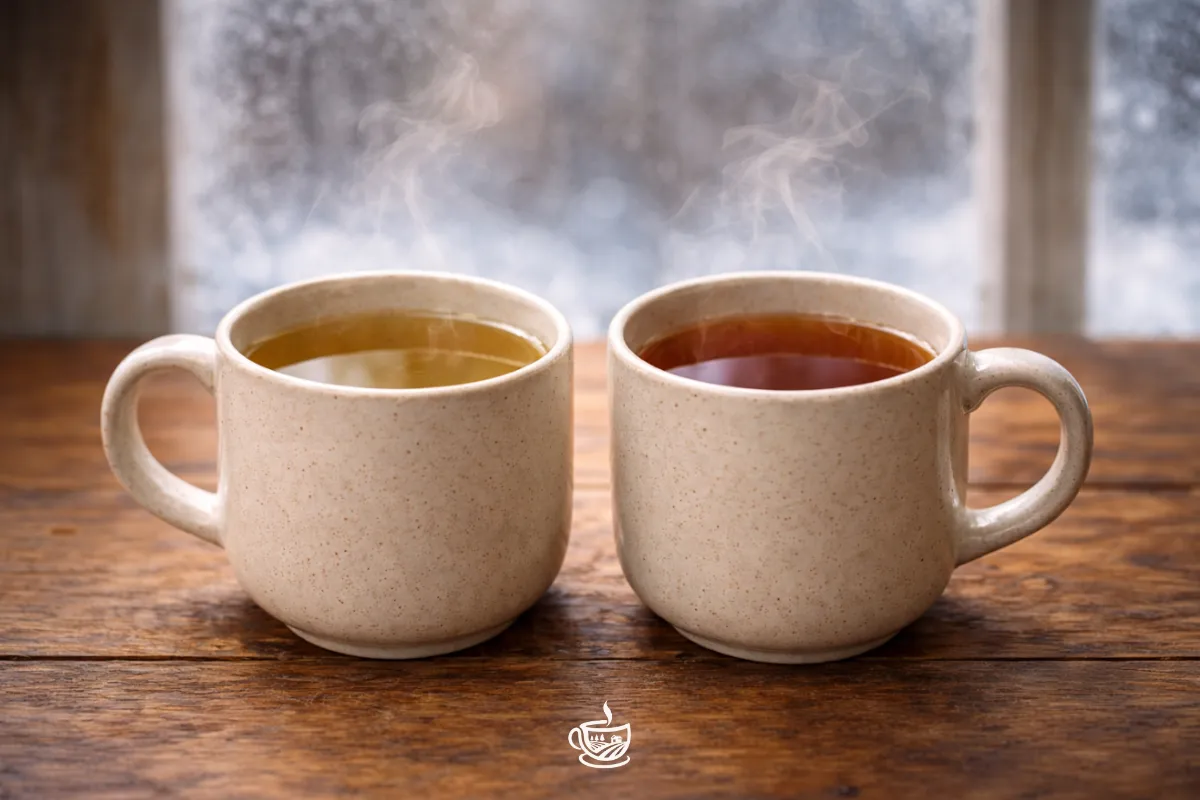
Does Tea Have Caffeine? A Calm, Honest Answer
Yes—true tea has caffeine. Here’s how much, why it varies, and how to choose a calmer cup (without the guesswork).
Why this matters (especially in winter)
Winter is basically the season of cozy mugs and early sunsets… which is lovely until your “relaxing tea” turns into Surprise! It’s Midnight Karaoke Brain.
If you’ve ever wondered, “Wait—does tea have caffeine or am I just sensitive?” you’re not alone. And you’re not dramatic. (Okay, maybe a tiny bit. But in a charming way.)
Here at Clemson Tea Farm on frost-watch nights, I want warmth and comfort… not the kind of energy that has me reorganizing the pantry at 11:47 p.m. Tea choices matter, y’all.
What to know first
Here’s the calm, honest answer:
If it’s made from Camellia sinensis, it has caffeine. That includes green, black, white, oolong, pu-erh and matcha.
If it’s not Camellia sinensis, it’s a tisane aka herbal-infusion (like peppermint, chamomile, rooibos). Most tisanes are naturally caffeine-free—but a few botanicals (like yerba mate) do contain caffeine.
Caffeine in tea is real… and variable. Same tea type, different brand, different scoop size, different steep time = different caffeine levels.
Decaf tea still usually has a tiny bit of caffeine. Decaf is lower, not zero.
A simple “baseline” for a typical 8 oz cup
Use these as friendly ballparks—not courtroom evidence:
Brewed black tea: ~40–50 mg
Brewed green tea: ~25–30 mg
Decaf black tea: a couple mg
Pro tip: If you’re trying to sleep better, don’t just switch from coffee to tea—switch your tea timing and steeping style, too.
The real reason tea caffeine feels “different” than coffee
Tea often comes with built-in “steady vibes” because it naturally contains L-theanine, an amino acid that can contribute to a more focused, less jittery feel for many people when paired with caffeine.
Translation: tea can feel like calm alertness, while coffee can feel like fast-forward + jazz hands.
Nerdy tangent: why the tea plant makes caffeine in the first place
Caffeine isn’t just here to power your to-do list.
In the plant world, caffeine functions as a defense compound—part of how plants protect themselves against pests and stress.
Here at Clemson Tea Farm: Growing tea teaches you fast: the plant is resilient, but it’s not passive. Tea is gentle in your cup… but in the field, it’s a tough little evergreen with strategies.
How to keep your cup calm (without giving up tea)
Here’s your practical “choose-your-own-caffeine” path:
1) Choose your tea type with intention. Black teas usually land higher than many green teas per cup (though there are exceptions).
2) Measure your leaf like you mean it. More leaf = more caffeine. A “heaping spoonful” is a caffeine wildcard.
3) Steep for the vibe you want.Shorter steeps generally extract less caffeine than longer steeps.
4) Cool it (literally) if you’re caffeine-sensitive. Hotter water can pull more caffeine out of leaf than cooler water.
5) Time it like an adult who enjoys sleep. If caffeine messes with your rest, set a personal “caffeine curfew” earlier in the day.
“Pro tip”: Want “cozy tea energy” but gentler? Do a shorter steep and don’t double-dip the bag for ten straight minutes like it owes you money.
Quick warning box (because I love you)
If you’re pregnant, highly caffeine-sensitive, managing anxiety, heart rhythm concerns, or on certain meds—talk with your Physician about caffeine limits and timing.
Yes, true tea has caffeine—but the good news is you can steer it: leaf amount, water temp, steep time, and timing turn tea into a calmer daily ritual.
Wanna Read More?
Wanna Geek Out?
Mayo Clinic: caffeine content chart for tea/coffee Review research on how brewing factors influence tea https://www.mayoclinic.org/healthy-lifestyle/nutrition-and-healthy-eating/in-depth/caffeine/art-20049372
U.S. FDA: caffeine guidance for most adults FDA: “Spilling the Beans” caffeine guidance — https://www.fda.gov/consumers/consumer-updates/spilling-beans-how-much-caffeine-too-much
ACOG: pregnancy caffeine guidance
ACOG: Moderate caffeine consumption during pregnancy — https://www.acog.org/clinical/clinical-guidance/committee-opinion/articles/2010/08/moderate-caffeine-consumption-during-pregnancyStudy on L-theanine + caffeine and attention/focus
PubMed: L-theanine + caffeine study (attention) — https://pubmed.ncbi.nlm.nih.gov/21040626/Research review: brewing time/temp influence caffeine extraction — https://www.sciencedirect.com/science/article/pii/S1279770723016937
