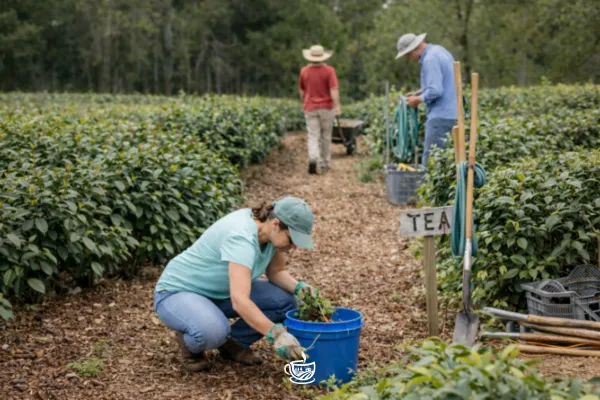
Garden Tours: How We’re Getting Ready for Future Visitors (Because “Someday” Deserves a Plan)
Our behind-the-scenes plan for future garden tours at Clemson Tea Farm—safe paths, signage, biosecurity basics, and tea-tasting flow.
Quick note before we begin
We don’t have garden tours scheduled right now—and we haven’t hosted them before. This post is my prethinking + planning (aka: the part where I make lists, walk the farm like a detective, and try not to trip over my own optimism).
If you’re thinking, “Ooooh, I want to come when tours do happen,” then do yourself a favor and sign up now—because subscribers will be the first to know when we open dates. (And yes, I fully intend to make that announcement with the appropriate level of squeal.)
Why this matters
Inviting people onto a working farm isn’t just “come wander the pretty plants.” It’s hospitality and stewardship:
Visitors deserve a safe, clear experience (no surprise hoses, no mystery “private area” confusion).
Plants deserve protection (because outside shoes + soil + new microbes = a whole situation).
The farm deserves a system (so tour day feels like welcoming guests, not hosting a scavenger hunt for the first-aid kit).
In my head, I can already hear it: “Wait… tea is a CAMELLIA?” And yes, I will absolutely grin like I just won the county fair.
What to know first
Here are the three principles shaping our “future tours” plan:
Safety is a system, not a scramble. We’ll plan routes, reduce trip hazards, and create a flow thiat doesn’t bottleneck at gates or narrow paths.
Biosecurity can be simple and still effective. We’re thinking “clean shoes, clear boundaries, and intentional walking zones,” not “sterile bubble farm.”
The tea moment is part of the tour. I want to include tea tasting and treat that space like a calm “clean zone,” with handwashing and a smooth serving setup.
Nerdy tangent: the boot problem (and why I care)
Here’s the thing: feet travel. Shoes carry soil. Soil carries life. Sometimes that life is beneficial, and sometimes it’s… not invited.
So in our planning, we’re building in “low-drama biosecurity,” like:
a boot brush at entry points
gentle reminders to stay on designated paths
limiting access to certain production areas when it makes sense
Not because we’re precious. Because we’re responsible.
“Pro tip” If we only do ONE thing for tour biosecurity: a boot brush + a friendly sign. It’s polite, simple, and surprisingly effective.
Our plan for preparing the farm for future visitors
1) Walk the route with “guest eyes”
Before we ever post tour dates, we’ll do a slow route walk—like we’re seeing the farm for the first time—looking for:
trip hazards (roots, uneven ground, hoses doing their best banana-peel impression)
slick spots (mud, algae, wet boards)
low branches at face level (the rudest kind of branch)
2) Tidy for humans, not for perfection
I’m not trying to make the farm look like a manicured golf course. I am trying to make it feel cared for and easy to navigate:
edges trimmed enough to define beds
mulch refreshed where it’s thin
seating areas cleared (no one wants to sit on last season’s mystery debris)
obvious “please don’t touch” zones protected by layout, not scolding
3) Post signs like a small outdoor museum
Signs aren’t bossy—signs are kindness.
In our future tour setup, we’ll use signage to answer questions before they become awkward:
Where do we park?
Where do we walk?
What’s off-limits?
Are there hazards (electric fencing, tools, uneven ground)?
Bonus: signs also help kids (and let’s be real—adults) feel confident and calm.
4) Create a “clean zone” plan for tea tasting (if we include it)
If tours eventually include tea tasting, I want it to feel peaceful—not like a chaotic cup-grab.
So we’re planning for:
a visible handwashing station
a clear flow: wash hands → sample tea → toss compost/trash → continue walking
labeled tea + labeled tisane options (because tea = Camellia sinensis and tisanes deserve their proper name)
“Pro tip” Design the flow so the handwashing station sits BEFORE the tasting table. Don’t rely on “good intentions”—rely on a good layout. As I always say, “Great design beats discipline”. - Nanelyn
5) Use gentle boundaries to protect the plants (without killing the vibe)
This is where “pretty” and “practical” hold hands.
Our plan includes subtle boundary tools:
natural bed edges
ropes or low fencing where needed
“look here” focal points to keep attention where it belongs
tighter access control around any sensitive production areas
And—because I’m me—I also think about planting strategy as part of tour readiness. We lean into guild-style planting thinking: plants that support, protect, and nourish each other through diversity—nitrogen fixers, pest-deterrent herbs, beneficial insect attractors, taproots, and groundcovers. It’s an elegant way to build resilience and beauty.
I love when visitors realize the “cute flowers” aren’t just cute—they’re part of the plan. (Welcome to the nerd garden.)
6) Build a simple “reset + notes” routine for after each tour (future-proofing!)
When we eventually host tours, we’ll want a reliable post-tour rhythm:
reset the space (trash, compost, seating, any tasting items)
quick route scan (did anything get trampled, loosened, or muddier than expected?)
jot down what worked + what didn’t (FAQs, bottlenecks, favorite moments)
That’s how a “first tour” becomes a “well-run tour,” one round at a time.
Hosting with heart
Hospitality is holy work—especially when it involves dirt, weather, and humans doing human things.
When the time comes, I want tours to feel like an invitation into a living story: the land, the plants, the learning, and the slow goodness of a cup made with intention.
And until that day? I’ll be out here… planning, praying, and relocating the hose………again.
We aren’t hosting garden tours yet—but we’re building a thoughtful plan now so that when we do, visitors feel welcomed, guided, and safe (and the plants stay protected).
Want to bring more farm-to-cup wellness into your life?
Be first to know when tours launch: Join our newsletter / tour notification list for behind-the-scenes updates and the first announcement when dates open.
While you wait: Grab the printable: Garden Tour Prep Checklist + Tea & Farm Reflection Page → Download the PDF
Wanna Read More?
Wanna Geek Out?
Agritourism safety checklist ideas (routes, signage, parking, hazards)
CDC handwashing guidance (helpful if/when tastings happen)
