Midseason Compost Check-In: What’s Working
Before Fall, your compost pile can tell you what it needs. Learn the signs of healthy decomposition and how to correct moisture, odor, or airflow problems before fall is officially here. This year the official astronomical start of autumn in the USA is Tuesday, September 22, 2026 at 8:04P.M. EDT. Wow, that really does sound official!
By midsummer, a compost pile has developed opinions.
It has taken in spring weeds, garden trimmings, kitchen scraps, chicken bedding, and dry leaves. Some ingredients have disappeared. Others are still sitting there looking remarkably pleased with themselves.
As we are heading into Fall aka Autumn, this is the right time to pause and observe. Before adding another wheelbarrow, look at what the pile is already telling you. Our post Turning Weeds into Compost Power explains what may safely go into the pile; this check-in is about whether those materials are actually breaking down.
How Can You Tell Whether Compost Is Working?
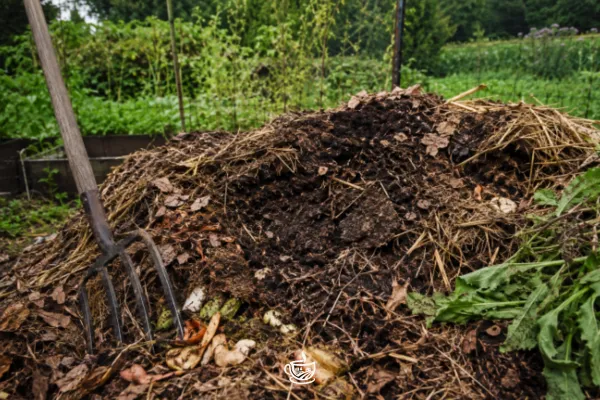
A working compost pile gradually shrinks, smells earthy rather than rotten, stays as damp as a wrung-out sponge, and contains materials that are becoming darker and harder to identify. The center may feel warm, but steady decomposition matters more than maintaining dramatic heat every day.
Composting is managed decomposition. Microorganisms need a reasonable mix of nitrogen-rich greens (hello grass clippings!), carbon-rich browns, moisture, and oxygen. When one of those is missing—or arrives by the wagonload, like when we clean out the chicken’s coup—the pile slows down or begins to smell.
Five Signs the Pile Is Making Progress
1. The pile is shrinking.
Settling is good news. As organic material decomposes, the pile loses volume. What looked full in June may be considerably shorter by the end of August.
2. The ingredients are losing their identities.
You may still recognize a twig, eggshell, or corn cob. Most softer materials should be blending into a dark, uneven mixture rather than remaining in tidy layers.
3. It smells earthy.
Healthy compost should smell like damp soil or a forest floor. Sour, rotten, or manure-heavy odors usually point to excess moisture, compaction, or too little oxygen.
4. The center feels warmer than the outside.
Heat shows that microorganisms are active, especially after fresh greens are mixed into a large pile. A small or slowly managed pile may not stay hot, but it should still show changes in texture, smell, and volume.
5. The moisture feels like a wrung-out sponge.
Squeeze material from the center. It should feel evenly damp without dripping. Dusty compost needs water. Soggy compost needs dry browns and more airflow.
Give the Compost a Midseason Tune-Up
1. Turn what needs turning.
Move dry outer material toward the center and loosen dense pockets. Turning introduces oxygen and brings unfinished ingredients into the more active portion of the pile.
2. Correct the moisture gradually.
For a dry pile, add water while turning instead of soaking the top and assuming the problem is solved. For a wet pile, mix in shredded leaves, straw, or just plain cardboard.
3. Break apart grass clippings.
Wet clippings can form heavy mats that block oxygen. Pull them apart (...but not with your hands! We don’t know what's in that pile keeping warm! Never put your hands in where you can’t see), and combine them with dry material. Greens and browns do not need to remain stacked in tidy decorative layers…puh-leeez.
4. Stop adding to the batch you want to use.
If you want finished compost for late fall beds or early December (that’s what we do), let this pile complete its work and start a second collection pile. One eternal pile may be convenient, but it never receives a proper finishing date.
For ideas on using finished compost without unnecessarily disturbing the soil, read Setting Up a No-Dig Garden in November After the Frost Date.
A two-bin system makes the work clearer. One pile accepts fresh material. The other is finishing. Even compost behaves better when it knows its assignment. Here at Clemson Tea Farm we have 7 compost piles! What? Let me tell you, one can never have enough compost.
What Happens When Compost Is Finished?
Finished compost is dark, crumbly, earthy-smelling, and no longer heats noticeably after turning. A few woody pieces may remain. Screen them out or return them to the next pile.
Spread finished compost as a soil amendment, then protect the surface with mulch or living plants. Compost feeds the soil; cover helps preserve its moisture and structure. That relationship is explained further in Summer Soil Care: Keep It Covered.
Reflection
A compost pile is not improved by constant interference. It is improved by paying attention and responding to what is actually happening.
Too dry? Add water.
Too wet? Add browns.
Smelly? Add air.
Still recognizable? Give it time.
Scraps become compost. Compost feeds soil. Soil supports plants. Plants become harvest. What leaves the garden eventually returns to it—not as waste, but as the beginning of another season.
Healthy compost comes from observing five things—shrinkage, texture, smell, warmth, and moisture—then correcting only the condition that is slowing decomposition.
✅ Ready to Check Your Own Pile?
Sign up for Clemson Tea Farm classes, volunteer opportunities, and WWOOF notifications
Wanna Read More?
Turning Weeds into Compost Power
How We Use Chickens to Regenerate Soil
Summer Soil Care: Keep It Covered
Wanna Geek Out?
Clemson Cooperative Extension: Composting
U.S. Environmental Protection Agency: Composting at Home
University of Minnesota Extension: Composting in Home Gardens
#ClemsonTeaFarm #TeaLeavesAndLifeLessons #Composting #SoilHealth #RegenerativeGrowing #OrganicGardening #GardenToCup #Zone7b #Zone8a #FarmLife
