Creating a Seasonal Tea Palette
Learn how to create a seasonal tea palette by matching the color, aroma, flavor, body, and ritual of Camellia sinensis tea to the changing year.
Tea has seasons, even when the tin in your cupboard does not.
In spring, I may want a cup that feels light, green, and newly awake. By late summer, I am looking for something that can stand over ice without losing its dignity. Autumn calls for toast, honey, wood, and orchard fruit. Winter wants a tea with enough body to sit beside the fire and mind its own business.
A seasonal tea palette is not a strict list of what you are supposed to drink. It is a way to notice which colors, aromas, textures, temperatures, and rituals suit the season you are actually living in.
For help naming what is already happening in your cup, begin with Tea Flavor 101: What Makes Tea Taste Like “Tea”?.
What Is a Seasonal Tea Palette?
Quick Answer: A seasonal tea palette is a personal collection of Camellia sinensis teas chosen to complement the weather, foods, colors, and daily rhythms of spring, summer, autumn, and winter. It uses liquor color, aroma, flavor, body, serving temperature, and ritual as guides—not rigid rules.
I use the word palette on purpose.
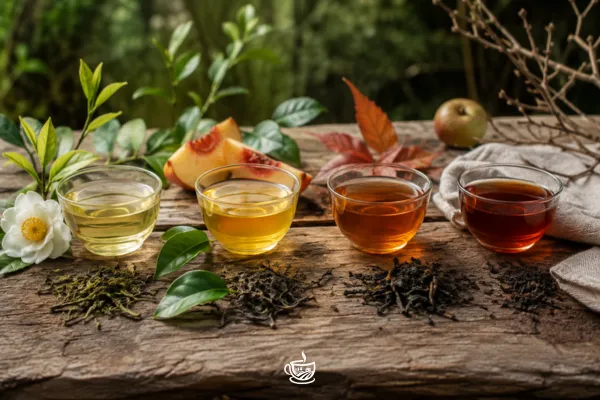
Think like an artist’s palette: pale gold, jade, amber, copper, russet, and mahogany. Each color suggests a mood before the first sip arrives.
But color is only the beginning. Tea’s sensory character also includes aroma, taste, mouthfeel, and aftertaste. The cup is experienced as a whole, not as a collection of unrelated parts.
Spring: Pale, Fresh, and Floral
Look for white tea, green tea, lightly oxidized oolong, or a delicate first-flush black tea.
Think of pale gold or light green liquor with impressions of flowers, tender greens, sweet grass, or soft stone fruit. Brew gently and let the cup stay light on its feet.
At Clemson Tea Farm Spring does not stomp through the door. It slips in through the first tender growth. Your tea can do the same.
Summer: Bright, Cooling, and Clear
Choose teas that remain lively when brewed lightly or served cold. Green tea, jasmine-scented tea, greener oolong, and brisk black tea can all work well.
Look for citrus, melon, flowers, peach, or clean mineral notes.
Summer tea should refresh you—not sit on your lap wearing a wool coat.
Autumn: Toasted, Fruity, and Grounded
Reach for roasted oolong, fuller black tea, hojicha, or an oolong with honeyed and orchard-fruit notes.
Autumn’s palette runs amber, copper, and russet. Listen for toast, nuts, baked fruit, honey, grain, wood, or naturally warm spice-like notes.
This is the season when the cup can carry a little more weight.
Winter: Deep, Warming, and Unhurried
Choose robust black tea, dark oolong, aged white tea, or fermented dark tea.
Look for deep amber, reddish-brown, or mahogany liquor; fuller body; and flavors suggesting malt, dried fruit, cocoa, wood, earth, or roast.
Winter is also a fine time for a pot that welcomes a second or third infusion. We are in no hurry. The garden certainly is not.
How to Create Your Own Seasonal Tea Palette
1. Choose three sensory words for each season.
Do not begin with tea names. Begin with how the season feels to you.
Spring might be fresh, floral, and light. Autumn might be toasted, honeyed, and grounded.
2. Match those words to teas you already own.
Smell the dry leaf, brew it plainly, and notice the liquor color, aroma, flavor, texture, and finish.
Use The Five Senses of Tea: A Tasting Meditation to slow down and pay attention to what is actually in the cup.
3. Select one everyday tea and one curiosity tea.
Your everyday tea should be easy to brew and easy to replace.
Your curiosity tea can be unfamiliar, seasonal, or slightly outside your usual preferences.
4. Test the serving style.
Try the tea hot, warm, chilled, or cold-brewed.
Change only one brewing variable at a time so you know what improved—or bullied—the cup.
5. Write down four things.
Record:
The tea’s name
Three sensory words
Your preferred brewing method
The season in which you most want to drink it
That is enough. We are building a tea ritual, not filing quarterly taxes.
Pro tip: Your seasonal palette is allowed to change. A roasted oolong may feel like October one year and exactly right for a rainy April afternoon the next.
A Visual Guide to the Seasonal Tea Palette
Season | Color Direction | Flavor Direction | Suggested Ritual |
Spring | Pale gold and jade | Fresh, floral, green | A quiet morning cup |
Summer | Clear gold and bright amber | Citrus, peach, lively | Cold brew or iced tea |
Autumn | Amber, copper, and russet | Toasted, honeyed, nutty | A slow afternoon pot |
Winter | Deep amber and mahogany | Malt, dried fruit, roast | Repeated infusions |
Let the Leaf Lead
A tea does not need to match the weather perfectly to belong in a season.
Pay attention to the leaf first.
A tea that tastes bright and floral may feel like spring even if it is technically a black tea. A green tea with deep roasted notes may feel more at home in autumn than summer.
Tea categories provide useful guidance, but your senses get the final vote.
This is where the path from garden to cup matters:
Soil → Plant → Harvest → Brew → Taste → Ritual
The soil and weather influence the plant. Harvest timing and processing shape the finished leaf. Brewing releases its character. Taste helps you recognize it. Ritual gives the cup a place in your life.
Reflection
The farm never asks every season to behave the same way.
Spring pushes. Summer stretches. Autumn concentrates. Winter rests.
Tea can help us notice those changes instead of drinking on autopilot. The leaf began in soil, responded to weather, was harvested and processed, and eventually arrived at your table.
Your seasonal tea palette completes that path by allowing the brew, taste, and ritual to respond to the year outside your window.
You are not trying to build the perfect tea collection.
You are building attention.
A seasonal tea palette turns your cupboard into a yearlong sensory map—one that follows soil, plant, harvest, brew, taste, and ritual without pretending every day needs the same cup.
Want to Bring More Farm-to-Cup Wellness into Your Life?
Choose one tea for the season you are in and taste it using The Five Senses of Tea Meditation.
Sign up for notifications about tea classes, guided tastings, volunteer opportunities, or becoming a WWOOFer through the Clemson Tea Farm contact page.
Wanna Read More?
Tea Flavor 101: What Makes Tea Taste Like “Tea”?
From Aroma to Aftertaste: Mapping Your Cup
Building a Beginner’s Home Tea Tasting Tray
Wanna Geek Out?
Taiwan Tea and Beverage Research Station: How to Use the Flavor Wheel
Using Sensory Wheels to Characterize the Perception of Specialty Teas
Tea Quality: An Overview of Analytical Methods and Sensory Evaluation
#ClemsonTeaFarm #SeasonalTea #TeaPalette #TeaTasting #CamelliaSinensis #TeaRitual #GardenToCup #TeaEducation #DrinkBetterTea
© 2026 Clemson Tea Farm. All rights reserved.
www.clemsonteafarm.com/disclaimers
