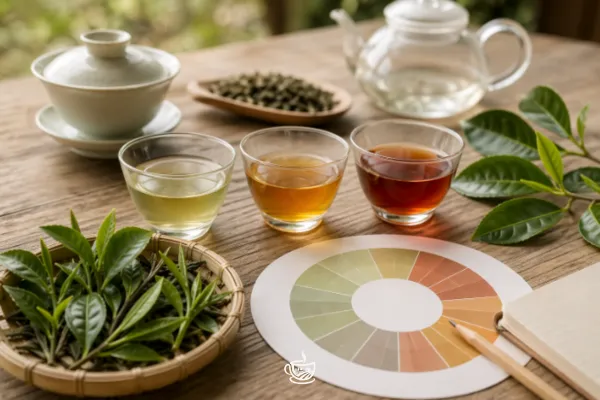
Tea Flavor 101: What Makes Tea Taste Like “Tea”?
Tea flavor starts with Camellia sinensis. Learn what creates grassy, brisk, floral, sweet, bitter, and smooth notes in your cup.
Quick snippet: What Makes Tea Flavor Taste Like Tea?
Tea tastes like tea because Camellia sinensis carries a layered mix of polyphenols, caffeine, amino acids, sugars, minerals, and aroma compounds; then harvest timing, processing, water temperature, steep time, and your own senses decide whether those compounds show up as grassy, brisk, floral, sweet, brothy, bitter, or smooth.
That’s the short version. The longer version is where things get delicious.
Why This Matters
Tea flavor is not one little note sitting politely in the cup. It is a whole front-porch choir: soil, sunlight, leaf age, harvest timing, processing, water, temperature, steep time, and—let’s be honest—whether you wandered off and forgot the kettle again.
Here at Clemson Tea Farm, I can taste the difference between a tender spring flush and a summer leaf that had to grow up with more heat, more bugs, and more attitude. Both are tea. Both come from Camellia sinensis. But they do not tell the same story.
And before we go any farther, let’s keep our tea manners straight: true tea comes from Camellia sinensis. If it comes from peppermint, chamomile, rooibos, lemon balm, or hibiscus, it is a tisane. Lovely? Yes. Tea? No, ma’am. For the full friendly fuss, read Tea, Tisanes, and That Poor Confused Mug on Your Counter.
Good tea flavor begins long before the kettle. Around here, it starts under your boots—in the soil—then moves through plant, harvest, brew, taste, and finally, ritual.
A tea leaf is not just “leafy.” It is chemical storytelling. Some compounds bring structure. Some bring sweetness. Some bring aroma. Some bring that drying, puckery feeling that makes your mouth feel like it borrowed a wool sweater.
The trick is learning which part of the cup is speaking.
The Flavor Crew Inside the Tea Leaf
Polyphenols: The Brisk Ones
Polyphenols, including catechins, are responsible for much of tea’s structure. They can taste brisk, slightly bitter, or astringent.
Astringency is not exactly a flavor. It is a feeling. It is that dry, tightening sensation along your cheeks, tongue, and gums.
Think of it this way:
Bitterness tastes sharp.
Astringency feels dry.
Briskness feels lively and clean when it behaves itself.
When tea is brewed too hot or too long, those compounds can stomp into the room wearing muddy boots. For help with that, read Why Your Tea Tastes Bitter and How to Fix It.
Caffeine: The Sharp Little Spark
Caffeine contributes bitterness and lift. It is part of why black tea can feel bold and wakeful, and why a strong cup can stand up to milk, breakfast, and your inbox.
Caffeine is not the whole story, though. Tea has a different personality than coffee because it is surrounded by other compounds, including amino acids, polyphenols, and aromatic compounds.
Amino Acids: The Smooth Talkers
Amino acids—especially L-theanine and friends—help create sweetness, softness, umami, and that brothy depth you may notice in some green teas.
This is why some teas taste gentle and rounded instead of sharp and shouty.
Aroma Compounds: The First Hello
Before tea touches your tongue, your nose is already taking notes. Floral, fruity, grassy, nutty, honeyed, marine, woody, roasted—all of those impressions often come from volatile aroma compounds.
That is why a tea can smell like spring grass, orchids, toasted nuts, peaches, or warm hay without having anything added to it.
Pro tip: Smell the dry leaf, then the wet leaf, then the cup. The wet leaf often tells the truth with fewer manners.
From Soil to Sip: The Six Flavor Levers
1. Start with the soil
Healthy soil gives the tea plant access to water, minerals, and microbial life. That does not mean dirt “flavors” the cup directly like seasoning salt. It means the plant’s growing conditions shape the leaf before it ever meets your teapot.
At Clemson Tea Farm, we feed the soil because the soil feeds the plant, and the plant feeds the cup. That is the loop. No shortcuts. No glitter. Just compost, mulch, patience, and observation.
2. Notice the plant
Cultivar, leaf age, season, stress, shade, sun exposure, and weather all matter. Tender buds and young leaves tend to brew differently than older leaves. Spring leaves are not summer leaves with better manners—they are their own chapter.
3. Respect the harvest
Harvest timing changes flavor. A first flush can taste fresh, delicate, bright, or green. Later harvests may bring more body, strength, and structure.
Freshly plucked tea has potential. Processing decides what that potential becomes.
4. Understand processing
White, green, oolong, black, dark, and yellow teas can all come from Camellia sinensis. The difference is what happens after harvest.
Processing can include withering, rolling, heating, oxidizing, drying, roasting, aging, or fermenting, depending on the tea style. That is where grassy leaves can become floral oolongs, brisk black teas, or mellow aged teas.
5. Brew with intention
Water temperature, steep time, leaf amount, and water quality are the dials you control at home.
If your tea tastes harsh, try cooler water or a shorter steep. If it tastes thin, try a little more leaf or a slightly longer steep. Change one thing at a time unless you enjoy creating beverage chaos before breakfast.
6. Taste like you mean it
Tea flavor is not just what hits the tongue. It includes aroma, body, texture, finish, and memory. That silky, drying, juicy, brothy, or velvety feeling matters. For more on that, read The Role of Texture in Tea Tasting.
Visual Teaching Moment: The Tea Flavor Ladder
Use this little ladder when you taste tea:
Soil
↓
Plant
↓
Harvest
↓
Processing
↓
Brew
↓
Taste
↓
Ritual
Now ask yourself:
What do I smell first?
What do I taste first?
Where does the flavor land—front of tongue, sides, back, cheeks?
Is it bitter, sweet, sour, umami, brisk, floral, grassy, roasted, brothy?
What lingers after I swallow?
Do I want another sip?
That last question matters more than people admit.
How to Train Your Tea Flavor Palate
1. Brew one tea plainly
Skip the sugar, milk, lemon, honey, and snacks for the first few sips.
Let the tea introduce itself before you dress it up for company.
2. Smell before you sip
Smell the dry leaf. Smell the wet leaf. Smell the cup.
Aroma is part of flavor. Your tongue is not doing this job alone, bless its heart.
3. Separate taste from texture
Ask: What do I taste? Then ask: What do I feel?
A tea may taste floral but feel drying. It may taste grassy but feel smooth. Texture gives flavor a place to sit.
4. Change one brewing dial
Try the same tea twice:
Same leaf amount
Same cup
Same water
Different steep time
Then compare. You will learn more from two honest cups than from memorizing twenty fancy flavor words.
5. Write three plain words
Do not start with “orchid nectar on a moonlit mountain.” Start with real words.
Try:
grassy
sweet
dry
smooth
nutty
floral
bitter
bright
soft
brothy
Fancy vocabulary can come later. First, trust your own mouth.
Pro tip: The best tasting notebook is the one you actually use. A sticky note counts. A stained envelope counts. We are not grading your handwriting.
Reflection
Some days on the farm, tea tasting feels like science. Other days, it feels like listening.
You pour the water. The leaves open. The cup changes color. The first sip arrives, and suddenly you notice the season hiding in there—the cool morning, the hot afternoon, the soil that held, the hands that harvested, the quiet moment you almost rushed past.
That is what makes tea taste like tea.
Not just chemistry. Not just processing. Not just brewing.
It is relationship.
Tea asks us to pay attention from soil to plant, from harvest to brew, from taste to ritual click here to learn more (https://clemsonteafarm.com/5dayteachallenge) And in a world that keeps trying to turn everything into a hurry, that may be one of tea’s greatest gifts.
Tea flavor is the story of Camellia sinensis made visible in the cup: soil, plant, harvest, processing, water, time, taste, and attention all steeped together.
Want to bring more farm-to-cup wellness into your life?
Download the printable guide: The Five Senses of Tea: A Tasting Meditation
Sign up for tea classes, guided tastings, volunteer days, or WWOOF opportunities at Clemson Tea Farm: Contact Clemson Tea Farm
Or visit the farm online and learn more about upcoming experiences: Clemson Tea Farm
Wanna Read More?
Wanna Geek Out?
Tea Quality: Analytical Methods and Sensory Analyses Used in Recent Studies — PubMed
Association Between Chemistry and Taste of Tea: A Review — DOI
Brewing Method-Dependent Changes of Volatile Aroma Constituents of Green Tea — PubMed
