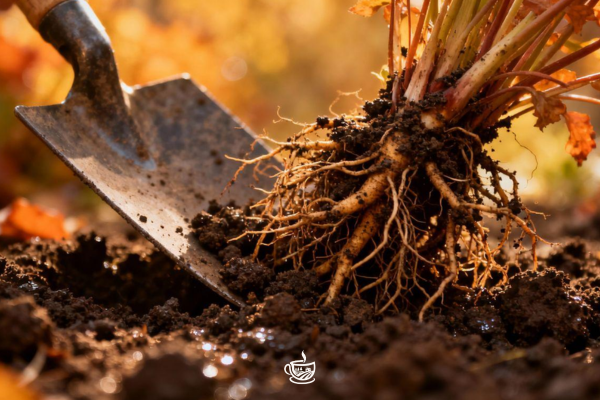
Healthy Soil, Healthy Plants: A Symbiotic Secret
Healthy soil depends on living roots, beneficial microbes, moisture, and protective cover. Discover the underground partnerships that help plants thrive.
Why This Matters: A Story from Clemson Tea Farm
At Clemson Tea Farm, I can scoop up a handful of our stubborn South Carolina clay and imagine two very different futures.
One is hard, crusted soil that sheds rain like a duck's back. The other is covered with organic matter, threaded with roots, and developing the crumbly structure that gives water and air somewhere to go.
Same clay. Different possibilities.
The difference isn't a fancy fertilizer or a bag promising instant results. It's how we manage a living system.
As I discussed in Summer Soil Care: Keep It Covered, protecting the soil surface is one of the simplest places to begin.
And beneath our tea bushes (Camellia sinensis), there is an entire community doing work we rarely see.
What Makes Healthy Soil Healthy?
Healthy soil is a living ecosystem where plant roots, microorganisms, organic matter, minerals, air, and water work together. Roots supply food for soil organisms, while beneficial microbes help recycle nutrients. Good soil structure supports water movement and root growth. Protecting these relationships helps plants become more resilient over time.
Healthy soil isn't just dirt with nutrients added. It has physical, chemical, and biological characteristics that must work together.
When those relationships function well, roots have better opportunities to access the water, oxygen, and nutrients they need.
What to Know First: The Underground Partnerships
Roots Feed Microbes
Plants use sunlight to produce sugars through photosynthesis. Some of that carbon enters the soil through root exudates, feeding microorganisms in the surrounding root zone, called the rhizosphere. Microbes, in turn, contribute to decomposition and nutrient cycling.
Fungi Extend the Conversation
Many plants form partnerships with mycorrhizal fungi. Plants supply carbon compounds to their fungal partners. Fungal threads extend through the soil, helping plants access resources, particularly phosphorus, under suitable conditions. Not every fungus is beneficial, and these partnerships vary with soil conditions and plant species.
Nitrogen Fixation Has Rules
Certain bacteria form nitrogen-fixing partnerships with legumes, including many clovers. But nitrogen fixation isn't an automatic fertilizer delivery service for neighboring plants. Nitrogen becomes available through biological processes such as root turnover and decomposition. And our tea shrubs don't fix atmospheric nitrogen simply because other plants nearby can.
Farm-table reminder: Soil biology is fascinating, but it doesn't replace a soil test or sensible management.
How to Support Healthy Soil Partnerships
Look before you buy.
Examine soil structure, drainage, plant growth, and root conditions. Test pH and nutrients when making fertilizer or amendment decisions.Protect the soil surface.
Apply suitable, clean organic mulch to reduce erosion, moderate soil temperature, and conserve moisture. Leave space around stems and trunks.Keep living roots where practical.
Consider cover crops or compatible groundcovers. Choose species suited to the season, crop, and growing conditions, without creating unnecessary competition.Disturb the soil less.
Avoid unnecessary tillage and driving or walking repeatedly over wet growing areas. Compaction reduces pore space and makes root development more difficult.Check moisture beneath the surface.
Don't judge soil moisture by appearances alone. At Clemson Tea Farm, I often check approximately four inches beneath the surface around our tea plants to help determine whether watering is needed. Root depth, soil type, weather, and plant age all matter.
Pro tip: Photograph the same marked patch of soil each month. A series of observations tells you more than one dramatic shovel-full. Soil has a story to tell, but it doesn't always speak on our schedule.
A Visual Teaching Moment: Follow the Underground Exchange
Think of the healthy soil system as a series of relationships:
Sunlight → Plant leaves → Roots → Soil organisms → Nutrient cycling → Plant growth
Rain, soil minerals, oxygen, organic matter, and protective cover help determine how well this system functions.
The arrows aren't a promise that every partnership works perfectly. They simply help us see how connected everything is. Want to explore what a diverse planting community can look like aboveground? Garden Guilds 101 offers another way to think about plant relationships.
A Reflection from the Farm
There is something wonderfully humbling about soil stewardship. We can measure pH, inspect roots, and watch how water moves through our clay. But we cannot see every fungal thread or every exchange happening beneath our boots.
And that's all right. We don't have to understand every microscopic conversation to make better gardening decisions. Cover the soil. Protect its structure. Encourage living roots where practical. Watch what happens. From soil to tea shrub, harvest to brew, the care we give our growing environment becomes part of our farm-to-cup story.
Good stewardship begins with paying attention.
Healthy plants are supported by a living soil community—not merely a bag of nutrients. Protect roots, cover bare ground, test before treating, and pay attention to drainage.
Want to Bring More Farm-to-Cup Wellness into Your Life?
Free printable: Soil First Field Check
Take this lesson into your own garden with a simple field checklist for evaluating soil cover, structure, moisture, and plant health.
Interested in learning more? Ask about Clemson Tea Farm classes, volunteering, and WWOOF opportunities. Visits and volunteer activities are arranged in advance.
Wanna Read More?
Wanna Geek Out?
#ClemsonTeaFarm #TeaLeavesAndLifeLessons #GardenToCup #SoilHealth #LivingSoil #CamelliaSinensis #TeaGrowing #RegenerativeGardening
© 2026 Clemson Tea Farm. All rights reserved.
