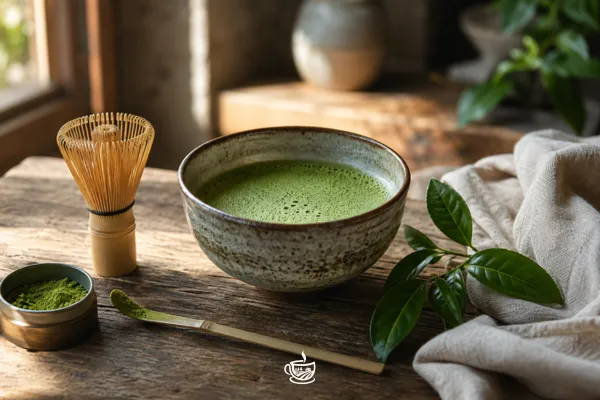
Matcha’s Mind-Body Benefits
Matcha may support focused attention, alertness, and a calming tea ritual—but it is not a cure-all. Here is what the evidence actually says.
Matcha has been asked to do entirely too much.
According to the louder corners of the internet, one green bowl should sharpen your brain, calm your nerves, improve your metabolism, polish your complexion, and perhaps answer your email.
That is a mighty workload for powdered leaves.
Matcha does offer an interesting combination of caffeine, L-theanine, tea catechins, and deliberate preparation. But its benefits deserve an honest look, not another wellness halo.
Matcha is true tea from Camellia sinensis. To see how one plant becomes very different cups, read Green, Black, Oolong… Same Plant, Different Process.
What Are Matcha’s Mind-Body Benefits?
Matcha may support alertness, attention, and a steadier-feeling focus because it contains caffeine alongside L-theanine and tea catechins. Early research is promising but limited. Matcha is a beverage and ritual—not a medical treatment, detox, or guaranteed mood booster.
That distinction matters. The research is interesting, but it does not support every claim printed on a matcha pouch.
What Makes Matcha Different?
Traditional matcha is made from shade-grown Camellia sinensis leaves prepared as tencha, then ground into a fine powder. Unlike loose-leaf green tea, the powdered leaf remains in the bowl and is consumed.
That does not make matcha automatically better—only different.
The Mind Benefit: Focus Without the Fuss
Matcha naturally contains caffeine and L-theanine. Caffeine can increase alertness, while L-theanine has been studied for possible effects on attention and relaxation.
Research has found small improvements in some attention measures, but the effects are modest and more study is needed.
So, does matcha provide “calm energy”?
Perhaps for some people. But that phrase describes an experience, not a guarantee. Serving size, total caffeine, food intake, and personal sensitivity all matter.
One person’s centered morning bowl is another person’s 10:30 a.m. case of the jitters.
For a related look at caffeine, L-theanine, and attention, read Why Black Tea May Improve Brain Function.
The Body Benefit: Keep the Claims Modest
Matcha contains polyphenols, including catechins such as EGCG. These compounds have antioxidant activity, but finding antioxidants in a bowl does not prove that the bowl prevents disease.
Many health claims come from broader green-tea research, laboratory work, concentrated extracts, or animal studies—not simply from people drinking a reasonable serving of matcha.
Matcha can fit into a health-supportive routine, but it should not replace medical care.
More powder is not automatically more beneficial. Sometimes it is merely …. more powder.
The Benefit We Can Feel: Ritual
The most dependable mind-body benefit may begin before the first sip.
You measure the powder, warm the bowl, whisk, smell the green aroma, and feel the bowl in your hands. For a few minutes, you are not scrolling, rushing, or hunting for your keys.
Any thoughtfully prepared tea can become a sensory ritual. Matcha simply insists that you participate.
Use The Five Senses of Tea: A Tasting Meditation to notice sight, sound, aroma, touch, and taste in your next bowl.
Clemson Tea Farm note: A tea ritual cannot remove every hard thing from the day. It can help us enter the day awake enough to notice what is in front of us.
How to Build a Sensible Matcha Ritual
1. Begin with a modest serving.
Follow the producer’s directions and use less if you are sensitive to caffeine.
2. Use hot—not aggressively boiling—water.
Very hot water can make matcha taste harsh. Sift the powder, add water, and whisk until lightly frothy.
3. Drink it earlier in the day.
If caffeine disturbs your sleep, afternoon matcha may not be your friend.
4. Pay attention to your body.
Notice your focus, stomach comfort, tension, heart rate, and sleep.
5. Let preparation be part of the benefit.
Put the phone down. Smell the powder. Listen to the whisk. Taste before sweetening.
A Sensible Word About Safety
Matcha contains caffeine. Too much may contribute to anxiety, palpitations, stomach upset, headaches, or disrupted sleep.
Green-tea extract capsules are not the same as drinking matcha. Concentrated extracts may interact with medications and have rarely been linked with liver injury.
Anyone who is pregnant, breastfeeding, very caffeine-sensitive, managing a medical condition, or taking medication should discuss substantial changes with a qualified health professional.
Reflection
Matcha’s value does not have to rest on exaggerated promises.
There is enough here without them: distinctive growing and processing, caffeine paired with L-theanine, vivid taste, and a preparation that asks us to slow down.
The leaf begins in soil, responds to shade, is harvested, processed, whisked, tasted, and finally welcomed—or not—into our ritual.
That is a worthy journey without pretending it can fix everything.
Matcha may gently support attention, alertness, and a deliberate daily rhythm—but its healthiest place is in a sensible serving, an honest reading of the evidence, and a ritual that helps us pay attention.
Bring More Intention to Your Next Bowl
Practice with The Five Senses of Tea: A Tasting Meditation.
And download the Matcha Mind Body Ritual Card to enhance your practice
Learn about tea classes, volunteering, or becoming a WWOOFer through the Clemson Tea Farm contact page.
Wanna Read More?
Why Black Tea May Improve Brain Function
Green, Black, Oolong… Same Plant, Different Process
Tea Flavor 101: What Makes Tea Taste Like “Tea”?
Wanna Geek Out?
Green Tea: Usefulness and Safety — National Center for Complementary and Integrative Health
Matcha, Attention, and Memory — PubMed
How Much Caffeine Is Too Much? — U.S. Food and Drug Administration
#ClemsonTeaFarm #TeaLeavesAndLifeLessons #Matcha #MatchaBenefits #CamelliaSinensis #TeaRitual #LTheanine #MindfulTea #DrinkBetterTea
