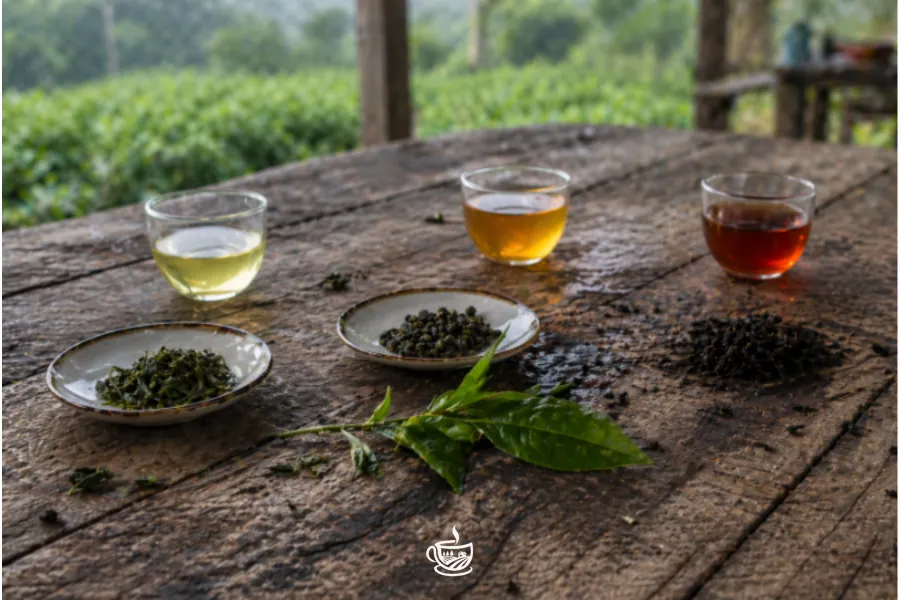
Green, Black, Oolong… Same Plant, Different Process
A Beginner Guide to How One Tea Plant Becomes Many Cups
Green tea, black tea, and oolong all come from the same plant: Camellia sinensis. That surprises folks because they taste like they wandered in from three different gardens, but no, sugar — same leaf. The real difference is what happens after harvest. Green tea is stopped early before oxidation gets going, oolong is allowed to wander partway down that road, and black tea is given more time to deepen. Same plant, different handling, and suddenly you have three cups with three very different colors, aromas, and personalities. Tea will do that to you.
Wanna learn how processing changes the cup? Read on…
Are green, black, and oolong tea made from the same plant?
Yes. Green, black, and oolong all come from Camellia sinensis. What changes is not the plant, but the process after harvest—how the leaves are withered, rolled, oxidized, heated, and dried. Same leaf. Different decisions. Different cup.
That truth stops folks right in their tracks.
The tea aisle makes them look like separate botanical families meeting at awkward holiday gatherings. But no, sugah. Same plant.
At Clemson Tea Farm, this shows up in the harvest basket. One basket of leaves can become bright green tea, fragrant oolong, or deep black tea depending on what happens next. Same soil. Same plant. Same harvest day. Different hands.
For the deeper “what counts as tea?” conversation, read Tea, Tisanes, and That Poor Confused Mug on Your Counter.
Why This Matters
Once you know these teas all begin as Camellia sinensis, tea gets less confusing.
Green tea is usually fresher, lighter, and more vegetal—sometimes grassy, sweet, or nutty.
Black tea usually has more body. It may taste malty, fruity, brisk, honeyed, or bold enough to wake up your eyebrows.
Oolong sits between them, but do not mistake “between” for boring. Oolong is a wide porch, not a tiny hallway. Some are floral and creamy. Others are roasted, fruity, or cozy enough to need a quilt.
Tea is soil, plant, harvest, brew, taste, and ritual. Processing is where the leaf starts telling its story.
What Changes After Harvest?
The big character here is oxidation.
Oxidation happens when a picked leaf meets air and begins to change, like a sliced apple turning brown on the counter.
Green tea oxidation is stopped early. Heat stops oxidation, keeping the cup fresh, bright, and green.
Oolong is allowed to wander a little. It is partially oxidized, giving it room to become floral, creamy, fruity, honeyed, or toasted.
Black tea gets more time to deepen. Withering and rolling help oxidation move along, creating a fuller, darker, richer cup.
And yes, paying attention counts. On the farm, attention is the difference between “Oh, that’s lovely” and “Well, bless it, we learned something today.”
Simple Comparison
Green tea: heated early; fresh, grassy, vegetal, sweet.
Oolong tea: partially oxidized; floral, creamy, fruity, toasted.
Black tea: more oxidized; malty, brisk, fruity, bold.
That is a guide, not a prison sentence. Region, season, weather, storage, and brewing matter too.
How to Taste the Difference
Brew them side by side
Make one green tea, one oolong, and one black tea using similar leaf and water.Look, smell, sip
Notice color, aroma, body, sweetness, bitterness, and finish. Tea will teach you, but it does not holler.Compare the feeling
Green may feel lively. Oolong may feel layered. Black may feel sturdy.
For brewing help, read Why Your Tea Tastes Bitter and How to Fix It.
Reflection
The leaf teaches humility.
You can start with the same plant, soil, weather, and harvest basket, and still end up with three different cups.
That is not confusion. That is craft.
Green tea says, “Catch me while I am fresh.”
Oolong says, “Give me time, and I will surprise you.”
Black tea says, “Let me deepen, and I will bring the backbone.”
Green, black, and oolong are not three different plants. They are different decisions made after harvest, and those decisions shape leaf color, aroma, body, flavor, and the ritual in your cup.
Want to bring more farm-to-cup wellness into your life?
Download Same Plant, Different Process Quick Guide → Download Here
Sign up for tea classes, volunteer days, and Clemson Tea Farm updates → Get notified
