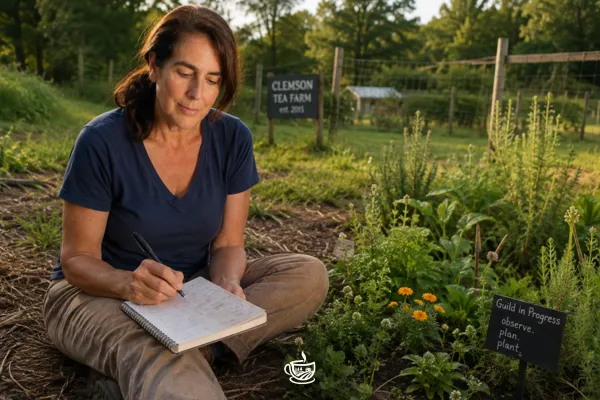
Observing Before Planting: Permaculture Planning
Before planting, learn to read sunlight, water, soil, wind, and movement so your permaculture garden works with the land instead of requiring constant correction. If Permaculture is a new word for you, check out some of our Permaculture blogs
There is something about an empty garden bed that makes a shovel feel urgent.
Fresh plants are waiting. Compost is ready. The weather is cooperating for once. Surely the sensible thing is to start digging.
Maybe. But first, stand still.
At Clemson Tea Farm, observation is part of the work. We watch where morning light reaches the soil, where afternoon heat settles, where water runs after rain, and where people and animals already travel. As we discuss in Harvesting Rainwater with Permaculture in Mind, water already has a path. Successful planting begins with noticing that path—and the other patterns shaping the site.
What Should You Observe Before Planting?
Observing before planting means studying sunlight, water, soil, wind, existing plants, and traffic before committing to a garden design. These observations help you place plants where their needs are naturally met, reduce unnecessary watering and replanting, and avoid putting permanent features in the wrong place.
Permaculture does not begin by forcing a plan onto the land. It begins by asking what the land is already doing.
Why Observation Matters
A site is rarely simply “sunny” or “shady.” Morning sun is different from late-afternoon heat. A slope that appears dry may carry rushing water during a storm. A sheltered corner may stay warmer, while a low place collects cold air.
These differences create microclimates. Once you recognize them, you can choose plants and structures more wisely.
This is not procrastination dressed in garden boots. It is the first design tool.
How to Observe a Site Before Planting
Follow the sunlight.
Visit in the morning, around midday, and again in late afternoon. Mark shadows, full-sun areas, and places receiving strong western heat.
Repeat this for more than one day. One cloudy afternoon does not constitute a solar study.
Watch water move.
Walk the site during or just after a steady rain. Look for puddles, runoff, erosion, soggy soil, and unusually dry areas.
Mark where water slows, spreads, sinks, or escapes. Those patterns can guide beds, paths, rain gardens, and moisture-loving plantings.
Meet the soil.
Dig several small holes because soil can change within a surprisingly short distance.
Notice whether it is sticky, sandy, compacted, rocky, crumbly, wet, or full of roots and earthworms. A soil test gives chemical information; your hands and shovel reveal structure and drainage.
Notice wind, temperature, and movement.
Look for exposed areas and places protected by buildings, hedges, fences, or slopes. Note warm walls, low frost pockets, and windy corners.
Then watch how people, wildlife, chickens, hoses, and wheelbarrows move through the space. Do not place a delicate bed across the route everyone already uses. The unofficial path will win.
Study what is already growing.
Existing plants are clues. Clover, sedges, moss, deep-rooted weeds, and thriving volunteers may reveal moisture, fertility, compaction, shade, or disturbance.
Before removing everything, ask whether a plant is protecting the soil or attracting beneficial insects.
When you are ready to build around an anchor plant, Garden Guilds 101: Winter Planning for a Smarter Spring explains how to add plant functions gradually.
Visual Teaching Moment: Make a One-Page Observation Map
Your map does not need to be pretty. It just needs to be honest.
Sketch the site and mark:
S for sun
SH for shade
W for wet areas or water flow
D for dry areas
P for paths and work routes
Arrows for slope and wind
Existing trees, shrubs, and structures
Use a different pencil color each time you observe. When several observations overlap, the design begins to emerge.
How Long Should You Observe?
A full year is valuable before installing ponds, terraces, permanent irrigation, large trees, or major pathways. Small, reversible plantings can begin sooner.
Observe for at least seven days.
Think: “What would I observe prior to purchasing property.” Visit at different times and include a rain event when possible.Record what you still do not know.
Mark questions about winter shade, summer heat, frost, and seasonal drainage rather than guessing.Start with one small trial.
Plant one short bed, one tree guild, or one section of groundcover.Review before repeating.
After thirty days, notice what thrives, what struggles, and what demands more labor than expected. Adjust the design before expanding it.
Reflection: Let the Land Answer First
Observation changes the order of the conversation.
Instead of beginning with “What do I want to plant?” we begin with, “What is happening here?”
The soil, sunlight, water, wind, plants, and pathways answer before the seed packet does. Listening helps us make fewer corrections and create systems that are easier to tend to.
At Clemson Tea Farm, the cup begins with soil, then plant, harvest, brew, taste, and ritual. Garden design follows the same rhythm.
Begin with the ground. Place the plant wisely. Let experience shape what comes next.
Observe first, plant second, and let the land help design a garden that requires less correction, less wasted effort, and fewer arguments with the shovel.
Want to Learn Alongside Us?
Sign up for information about Clemson Tea Farm classes, volunteer opportunities, and WWOOF experiences through the Clemson Tea Farm contact page.
Wanna Read More?
Wanna Geek Out?
#ClemsonTeaFarm #TeaLeavesAndLifeLessons #PermaculturePlanning #ObserveBeforePlanting #GardenDesign #SoilHealth #RegenerativeGardening #Zone7b #Zone8a
