Organic vs. Regenerative: What’s the Difference?
Organic is a legally defined and certifiable production label, while regenerative is a broader approach focused on improving soil, water, biodiversity, and whole-farm function. They often overlap, but they are not synonyms, and “regenerative” is not one single regulated claim in the way “organic” is. (AMS)
In this blog, Organic vs regenerative: learn which one is legally defined, which one aims to rebuild soil, and how to tell the difference without the buzzwords.
Why this matters
At Clemson Tea Farm, organic vs regenerative is not some fussy little word game people play while holding expensive produce. It shows up in real decisions: what goes on the soil, what stays off it, what gets mulched, what gets planted together, and whether the land is merely surviving or actually getting better.
That distinction matters because organic has a formal USDA-backed certification framework, while regenerative is more of an umbrella approach focused on improving soil, biodiversity, water function, and long-term resilience. They overlap, but they are not the same thing. (AMS)
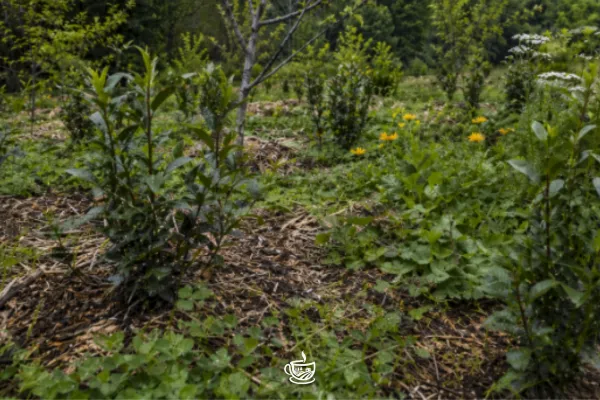
Around fruit trees and tea, we often think in layers—groundcovers, insect-attracting flowers, taproots, mulch plants, and helpers that make the whole planting steadier over time. That’s not trend-chasing. That’s trying to build a system that behaves better next season than it did this one.
What’s the difference between organic and regenerative?
Organic is a legally defined and certifiable production label, while regenerative is a broader approach focused on improving soil, water, biodiversity, and whole-farm function. They often overlap, but they are not synonyms, and “regenerative” is not one single regulated claim in the way “organic” is. (AMS)
What to know first
Organic is a rule-backed label. In the United States, “organic” is governed by USDA standards through the National Organic Program. That means it is more than good intentions and prettier packaging. It is a regulated claim tied to certification, inspections, and compliance. (AMS)
Regenerative is a direction, not one single universal rulebook. The term is commonly used to describe practices that build soil health, improve biodiversity, reduce erosion, and strengthen the farm ecosystem, but it does not have one universally enforced definition the way USDA Organic does. (SARE)
They can overlap beautifully—or not at all. A farm can be certified organic and still do a mediocre job rebuilding soil. Another can use the word regenerative while remaining vague about standards, measurements, or accountability. The strongest systems usually combine disciplined standards with land-level results. That last sentence is an inference based on how these systems are defined. (AMS)
Science or explanation?
A simple way to picture it is this:
Organic asks:
What inputs were used? What practices were allowed or prohibited? Was the farm certified and inspected?
Regenerative asks:
Is the land improving? Is soil functioning better? Is water held more effectively? Is biodiversity increasing? Is the system becoming more resilient?
That is why the same farm can sound impressive in one conversation and flimsy in another. If someone says “organic,” there is a formal framework behind that word. If someone says “regenerative,” your next question should be, “According to whom, and by what evidence?” (AMS)
One useful wrinkle here: Regenerative Organic Certified® is its own certification, and it uses organic certification as a baseline requirement. In other words, it builds on organic rather than replacing it. (Regenerative Organic Alliance)
Visual teaching moment
Imagine two clipboards hanging in the barn.
The first clipboard says:
Did we follow the approved standard?
The second clipboard says:
Did the place get healthier?
You want both. And that's what we want, too.
Because a farm can avoid a lot of problematic inputs and still leave the soil tired, compacted, bare, or biologically dull. And a farm can talk a big regenerative game while being very light on proof. The sweet spot is when the rules and the results start shaking hands.
How to do it
1. Read the label before you read the romance.
If a product is labeled organic, that claim is tied to a specific USDA certification framework. If it says regenerative, look for which standard, certification, or measurable farm practices sit underneath that word. (AMS)
2. Ask whether the system avoids harm or repairs damage.
Organic standards emphasize what is allowed, what is restricted, and how the product is produced and handled. Regenerative language usually points toward soil-building, biodiversity, water management, and resilience. Those are connected questions, but they are not identical. (AMS)
3. Look for land-level evidence.
Cover crops. Mulch. Reduced disturbance. Perennials. Diverse planting. Living roots. Integrated systems. Around orchards and tea, that may look like guild-style planting with groundcovers, insect helpers, taproots, and nutrient-support plants all doing quiet teamwork instead of leaving bare dirt to bake. Regenerative farming approaches are commonly associated with those kinds of practices. (SARE)
Pro tip: When a farm uses the word regenerative, don’t just ask what they believe. Ask what has changed in the soil, water, plant health, or biodiversity because of those beliefs.
Reflection
This is one of those places where marketing can make people either cynical or smug, and neither response is especially useful.
I’d rather stay practical.
If organic gives us a guarded gate, good. We need guarded gates. If regenerative reminds us that the goal is not merely “less bad” but genuinely better land, also good. We need that too.
On a working farm, the holiest-sounding word in the world still has to survive a drought, a weed flush, a pest wave, and a season when the clay behaves like an argument.
Organic tells you a farm follows a recognized rulebook; regenerative asks whether the land itself is becoming more alive, resilient, and worth handing to the next set of hands.
Wanna Read More?
How We Protect Tea Plants from Late Frost (Without Babying the Whole Farm) (Clemson Tea Farm)
Harvesting Rainwater with Permaculture in Mind (Clemson Tea Farm)
Loose Leaf vs Tea Bags: What Actually Matters (and What Doesn’t) (Clemson Tea Farm)
Wanna Geek Out?
Organic Certification | USDA Agricultural Marketing Service (AMS)
Regenerative Agriculture: An Introduction and Overview | Oklahoma State University Extension (extension.okstate.edu)
Regenerative Organic Certified Framework | Regenerative Organic Alliance (Regenerative Organic Alliance)
