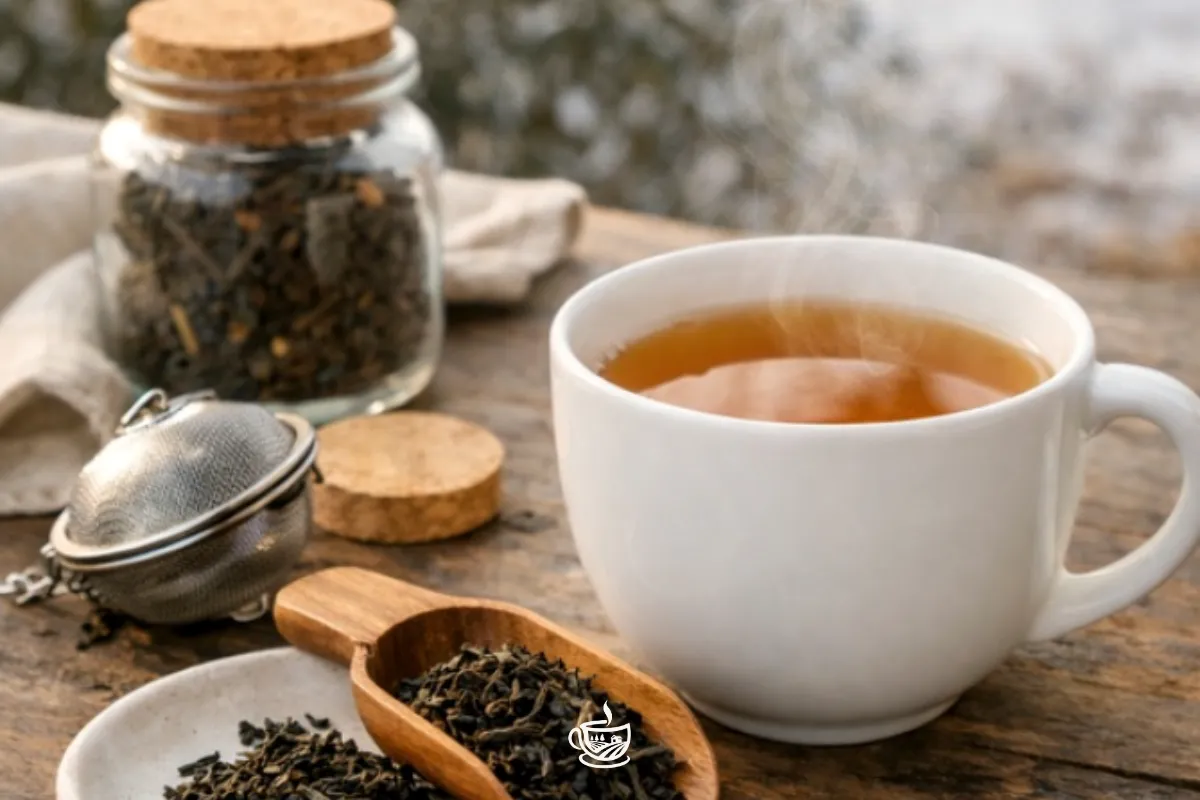
Tea 101: Start Here
Your Beginner Roadmap to Better Tea
New to tea? Start here. Learn what tea really is, how to brew it well, and how to build better tea habits—one calm cup at a time.
Why This Matters (Especially If You’re New)
If you’ve ever stood in front of a tea shelf thinking, “Why is this so complicated?”—welcome. You’re exactly who this post is for.
Tea shouldn’t feel like a pop quiz. It should feel like an invitation.
At its core, real tea comes from one plant—Camellia sinensis
Everything else (peppermint, chamomile, rooibos) is a tisane (aka an herbal infusion). Lovely. Helpful. But not tea. Words matter here—not to be fussy, but to help you choose what you actually want.
Tea/Life/Farm example:
On winter mornings at Clemson Tea Farm, I brew the simplest tea possible—one leaf, one cup, one quiet moment before the day wakes up. No gadgets. Just attention.
Your Tea Roadmap (T101 → T201 → T301)
If you like a clear path (same), here’s the ladder:
T101 (Start Here): Brew a solid, non-bitter cup you actually enjoy (this post).
T201 (Next): Learn the difference between tea and tisanes + build your home tasting setup.
T301 (Nerdier, but fun): Explore tea color, origin, and why your steep changes flavor.
What to Know First (Tea 101 Ground Rules)
1️⃣ Tea comes from one plant.
Green, black, oolong, white, dark—same plant. Different processing.
2️⃣ Many prefer loose leaf.
Whole leaves = better flavor, less bitterness, more control.
But if you don’t have loose leaf? Use a single-serving teabag and carry on—you’re still doing tea right.
3️⃣ Water + time = everything.
Most “bad tea” is just over-steeped tea.
4️⃣ You don’t need fancy gear.
A mug, hot water, and a strainer will get you 90% there.
5️⃣ Milk and sugar are optional—not required.
Good tea stands on its own. (But no judgment if you like a splash.)
The Beginner Brewing Blueprint (No Stress Version)
How to Brew a Better Cup Today
Step 1 – Heat water (not boiling for everything).
Green & white: hot, not boiling
Black & oolong: near boiling
Step 2 – Use less leaf than you think.
Start with 1 teaspoon loose leaf (or one single-serving teabag) per cup.
Step 3 – Shorter steeps are your friend.
Green/white: 1–2 minutes
Oolong: 2–3 minutes
Black: 3–4 minutes
Step 4 – Taste. Adjust. Repeat.
Tea is learned by sipping, not memorizing.
Pro tip:
If tea tastes bitter, don’t toss it—shorten the steep next time. Leaves aren’t the problem. Time usually is.
Nerdy (But Helpful) Tangent: Why Tea Gets Bitter
Bitterness usually comes from over-extraction (too hot + too long), not “bad tea.” That’s why gentle timing is the beginner superpower.
If you want the science-y version of how brew temp/time changes extraction in green tea click here.
At Clemson Tea Farm, we harvest young leaves for the same reason—tender growth gives a gentler cup. And winter? Tea harvested in Winter has its own sweet secrets, too.
Tea Isn’t a Personality Test (But It Does Tell a Story)
Green tea: fresh, grassy, clean
Oolong: layered, curious, expressive
Black tea: bold, grounding, familiar
White tea: subtle, quiet, patient
None are “better.” They just meet you in different seasons of life.
Good tea isn’t about rules—it’s about paying attention. One leaf. One cup. One moment at a time.
Want to bring more farm-to-cup wellness into your life? Contact Us!
➡️ Download a beginner-friendly brewing guide
Get my free “Ceramic Teapot Brewing Guide” (perfect for Tea 101 brewing fundamentals):
➡️ Want structure for the habit?
Join the next 5 Day Tea Challenge:
➡️ Get notified about classes / farm days / volunteering / WWOOF-style learning
Use the contact form to raise your hand (and get on the list):
Wanna Read More?
Tea vs Tisanes (Camellia sinensis 101 + printable cheat sheet)
Build a Beginner Tea Tasting Tray (simple setup, better tasting)
What a Tea’s Color Might Reveal About Its Origin
Wanna Geek Out?
Royal Botanic Gardens, Kew — Tea plant profile (Camellia sinensis)
Harvard T.H. Chan — “Tea” (plain-English overview)
ISO standard anchoring black tea definition (ISO 3720)
Tea Association-guided brew temps/time chart (via BUNN Tea Basics brochure page)
Washington State University Extension — Tea production overview (Camellia sinensis)
