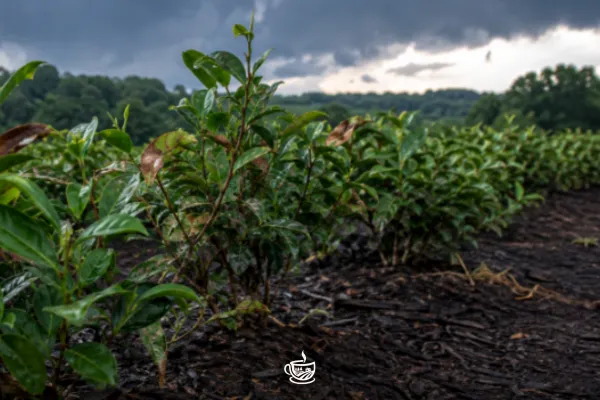
Climate Change and Tea: Real Impacts in Real Time
Climate change is already affecting tea harvests, flavor, growing regions, and farm decisions. Learn what changing weather means for Camellia sinensis—from soil to cup.
Some mornings at Clemson Tea Farm begin with damp soil and a reasonable forecast. By afternoon, the heat has climbed, the ground is drying, and the rain that ignored us all week arrives in one hard burst.
That is the farming face of changing climates. It is not simply “warmer weather.” It is greater instability: hotter days, uneven rainfall, drought, intense storms, shifting frost dates, and seasons that no longer follow quite the same script.
That is why practices such as those in Summer Soil Care: Keep It Covered matter long before a leaf reaches the basket.
How Is Climate Change Affecting Tea?
A change in climate is altering the temperatures, rainfall patterns, pest pressure, harvest timing, leaf chemistry, and growing regions of Camellia sinensis. Growers may harvest less leaf, harvest at different times, or discover that familiar plants produce tea with different aroma, bitterness, sweetness, and body.
A 2026 analysis of several major tea-growing regions in India found significant changes in temperature patterns during the previous 30 years, although the direction and severity varied by location. Climate change is not arriving evenly, but it is already changing the conditions under which tea is grown.
Why Tea Is Especially Sensitive
Tea is a perennial crop. A shrub may remain in the field for decades, so today’s planting decision must live through tomorrow’s climate.
The harvested product is also the leaf itself. Heat, rainfall, sunlight, soil moisture, and the timing of stress can influence shoot growth and the chemical balance inside that leaf.
Research published in 2025 found that rainfall, average temperature, and accumulated heat were important drivers of catechin production across different tea-growing locations and seasons.
In farm-table language: weather does not merely affect how much tea grows. It can affect what that tea becomes in the cup.
The Leaf Keeps a Weather Record
Two harvests from the same plants may look similar in the basket but behave differently during withering, rolling, oxidation, and drying.
One may carry more sweetness or floral aroma. Another may be more astringent, slower to wither, or less forgiving during processing.
That does not mean one hot afternoon ruins a crop. Climate is about patterns. Repeated heat, drought, excessive rain, or sudden cold can change plant growth, pest activity, harvest timing, and recovery.
For the cup side of this story, Tea Flavor 101: What Makes Tea Taste Like “Tea”? explains how soil, season, processing, and brewing meet in flavor.
What Tea Growers Can Do Now
1. Record what the plants are doing.
Track rainfall, temperature extremes, budbreak, first flush, pest pressure, irrigation, harvest weight, processing behavior, and cup quality.
Memory is a charming storyteller but a poor research assistant.
2. Keep the soil covered.
Mulch, living groundcovers, cover crops, and organic matter reduce evaporation, soften the impact of hard rain, and moderate soil-temperature swings.
3. Plan for too little water—and too much.
Watch where water pools, runs off, or disappears too quickly. Build soil that drains well while retaining moisture, and direct stormwater toward useful infiltration rather than erosion.
4. Use shade thoughtfully.
Research in Mississippi tea fields found that shade reduced summer leaf temperatures, encouraged growth, and helped limit winter cold injury. Shade also changed leaf chemistry, so it should be tested rather than treated as a universal answer.
5. Protect diversity.
Cultivars and seed-grown plants may respond differently to heat, cold, drought, and disease. A field with several genetic answers is less dependent on one plant type coping perfectly with every future condition.
At Clemson Tea Farm, when two tea harvests behave differently during processing, weather records help us determine whether the difference began in the field rather than in the processing room.
A Visual Teaching Moment: Watch Three Clocks
The weather clock records rain, heat, frost, humidity, and sunlight.
The plant clock records budbreak, growth, stress, dormancy, and recovery.
The cup clock records aroma, flavor, astringency, sweetness, color, and processing response.
When one clock shifts, the others may shift with it.
Climate-resilient tea growing connects:
Soil → Plant → Harvest → Brew → Taste → Ritual
Reflection
Climate change is too large for one farmer to solve from the tractor seat. But observation is not helplessness.
Every covered patch of soil, recorded harvest, carefully placed shade tree, conserved gallon of water, and resilient plant selection gives us better information and a steadier farm.
The goal is not to force the land to behave exactly as it did 30 years ago. The goal is to notice what is happening now and respond with wisdom rather than panic.
Climate change is already altering how tea grows and tastes, but healthier soil, careful records, thoughtful water management, shade, and plant diversity can help carry Camellia sinensis—and the ritual in our cups—through the seasons ahead.
✅ Want to Grow Your Tea Knowledge Along With Us?
Sign up for notifications about Clemson Tea Farm classes, volunteer opportunities, and WWOOF experiences through the Clemson Tea Farm contact page.
Wanna Read More?
How We Protect Tea Plants from Late Frost—Without Babying the Whole Farm
Harvesting Rainwater with Permaculture in Mind
Summer Soil Care: Keep It Covered
Wanna Geek Out?
Food and Agriculture Organization: Tea—A Resilient Sector
Frontiers in Plant Science: Environmental Drivers of Catechin Production in Tea
Frontiers in Nutrition: Shade Effects on Tea Growth and Leaf Chemistry in Mississippi
USDA Southeast Climate Hub: Climate Adaptation for Croplands
#ClemsonTeaFarm #TeaLeavesAndLifeLessons #ClimateChangeAndTea #CamelliaSinensis #GardenToCup #AmericanGrownTea #TeaFarming #SoilHealth #ClimateResilience #DrinkBetterTea
