Keyhole Beds: Form and Function
Keyhole beds combine composting, water-wise design, and easy access for small gardens, teaching beds, and soil-first growers.
Why This Matters
A keyhole bed is what happens when a raised bed, compost pile, and common sense sit down at the farm table and decide to cooperate.
Around Clemson Tea Farm, I trust any garden design that protects soil, saves water, and keeps people from stepping where roots are trying to work. If you’re thinking about water movement, pair this with Harvesting Rainwater with Permaculture in Mind. Rain is free, sugah, but only if you slow it down long enough to matter.
Keyhole beds are useful for small spaces, kitchen beds, teaching gardens, and growers who want compost, moisture, and easy reach working together.
Pro tip: A pretty garden shape is nice. A garden shape that feeds soil and saves your back? Better.
What Are Keyhole Beds?
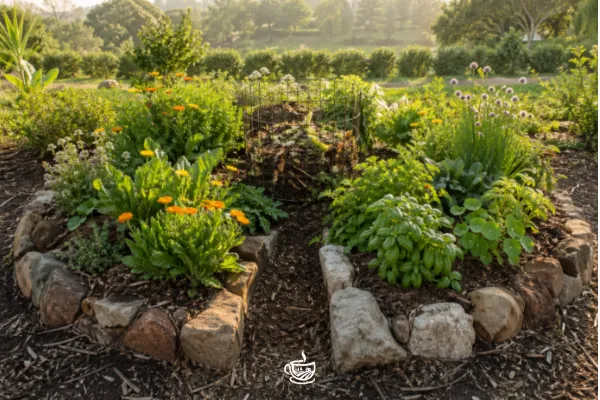
Keyhole beds are compact raised beds, usually round or horseshoe-shaped, with a wedge-shaped access path and a central compost basket. The design lets gardeners feed, water, plant, and harvest without stepping into the growing soil, which helps protect soil structure and keep daily care simple.
The “keyhole” is the little path that lets you reach the center without climbing into the bed like a raccoon in the salad greens. The middle basket holds compostable plant scraps and water. As those scraps break down, moisture and nutrients move outward into the planting area.
So the form is not decoration. This form has chores.
Why the Shape Works
A good keyhole bed has three working parts.
Outer wall
Holds soil, compost, mulch, and roots. Stone, brick, blocks, or untreated rot-resistant wood can work.Keyhole entrance
Gives you access to the center while keeping feet out of the growing zone. Less compaction means happier roots.Center compost basket
This is the bed’s working heart. Kitchen scraps, leaves, and water go here—not scattered across the bed like garden confetti.
Together, those parts create raised-bed access, composting, water efficiency, and a no-step planting area in a small footprint.
How to Build a Keyhole Bed
Choose a sunny, convenient spot.
Put it where you will see it, water it, and harvest from it. A neglected keyhole bed still has better geometry.Mark the circle and entrance.
Six feet across is a friendly beginner size. Keep the path wide enough to step in and the bed easy to reach.Build the wall and basket.
Make the outer edge sturdy. Use wire mesh, hardware cloth, or woven sticks for the basket so water and finished compost can move outward.Layer the bed.
Start with small sticks or rough plant material, then add leaves, aged compost, soil, and mulch. Think soil first, then plants.Plant by role.
Put taller plants near the center, lower herbs and flowers near the outside, and groundcovers where bare soil would fuss.
Pro tip: Water the compost basket and the bed during dry spells. Water-wise does not mean waterless.
What to Plant in a Keyhole Bed
Think plant jobs, not just plant names.
Use nitrogen helpers like beans, peas, or clover. Add taproot plants such as parsley, dill, chicory, or daikon. Bring in pest-confusing plants like chives, garlic, basil, rosemary, and marigold. Invite beneficial insects with calendula, yarrow, dill, borage, and cosmos. Cover bare soil with thyme, oregano, nasturtium, violets, or low clover.
For a Clemson Tea Farm-style teaching bed, I plant calendula, chives, parsley, basil, thyme, nasturtium, and seasonal greens around one bold center plant. Not twelve. A garden is not a committee meeting.
I would not crowd mature Camellia sinensis into a keyhole bed. Tea is a woody shrub with long-term needs: room, drainage, acidic soil, and patience. Keyhole beds are better for herbs, vegetables, pollinator plants, and tisane botanicals.
Visual Teaching Moment
Picture this: a garden bed from above: outer wall, keyhole path, compost basket, planting ring, and mulch blanket.
That little circle teaches the garden story. Soil is protected. Plants are fed. Scraps return to the system. Harvest comes from care. Then the gardener carries flavor back to the kitchen, the cup, and the daily ritual.
Reflection
A good garden bed should respect the soil, the plant, and the gardener’s body.
Keyhole beds do that beautifully. They keep feet off the growing area, turn scraps into fertility, place water where roots can use it, and invite steady observation. That is the kind of design I trust on a hot afternoon, with dirty hands and dinner still needing to happen.
Better flavor, whether in a basket of herbs or a cup of tea, begins looooong before harvest.
A keyhole bed is a compact, compost-fed, soil-protecting garden system that turns daily scraps, careful watering, and smart planting into a healthier harvest.
Want to bring more farm-to-cup wellness into your life?
Download the printable PDF: Keyhole Bed Planning Sheet
Sign up for notifications about online or in-person tea classes, volunteer days, or becoming a WWOOF-er at Clemson Tea Farm → Get in touch with Clemson Tea Farm
