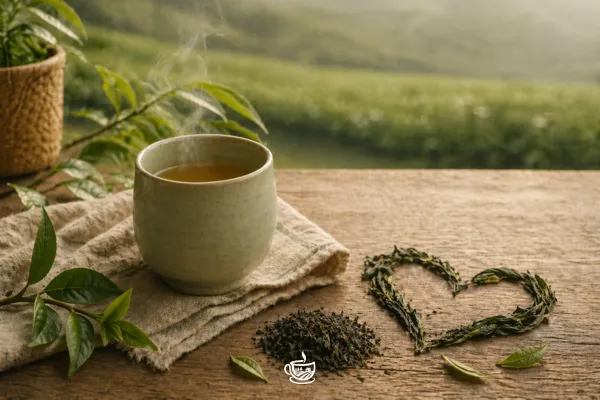
The Science of Tea and Heart Health
Tea and heart health: how Camellia sinensis polyphenols may support blood pressure, cholesterol, and a calmer daily ritual.
Why this matters
Out in the tea rows, heart health doesn’t begin at the kettle.
It begins in the soil. Then the roots. Then the leaf. Then the harvest basket. Then the brew. Then the taste. Then the quiet little ritual where you finally sit down and remember you are, in fact, a human being and not a farm tool with opinions.
That’s the farm-to-cup story of tea and heart health.
And by tea, I mean true tea: Camellia sinensis. Green, black, white, oolong, yellow, and dark teas all come from this one remarkable plant. Chamomile, peppermint, and rooibos are lovely tisanes, but they are not tea. We love them. We just don’t confuse the family tree at the farm table.
Want the full tea-versus-tisanes explanation? Start here: Tea, Tisanes, and That Poor Confused Mug on Your Counter.
Pro tip: If your cup is mostly sugar, syrup, and whipped cream, wearing a tea costume, the heart-health conversation has left the building.
Can tea support heart health?
Tea may support heart health because Camellia sinensis leaves contain polyphenols—especially flavonoids like catechins and theaflavins—that are associated with healthier blood pressure, cholesterol patterns, and blood-vessel function when tea is enjoyed unsweetened as part of an overall heart-wise lifestyle, not as a stand-alone treatment. (NCCIH)
That’s the plain-English version. Tea is not medicine, and it is not a substitute for your physician, medication, movement, sleep, or vegetables. But research does suggest that green and black teas may have modest benefits for some heart disease risk factors, especially when they replace sugary drinks instead of joining them at the dessert table. (www.heart.org)
What to know first
Tea’s heart-health story mostly comes down to plant compounds.
Tea contains polyphenols, including catechins in green tea and theaflavins in black tea. Harvard’s Nutrition Source notes that plain teas can contain similar overall polyphenol levels, though the types vary depending on processing, growing conditions, blending, and brewing. (The Nutrition Source)
Here’s what matters for a daily cup:
Tea is a supportive habit, not a cure.
The strongest research points toward association and modest risk-factor support, not “drink this and cancel your checkup.” Please do not make Nanelyn use her nurse voice.Unsweetened matters.
The American Heart Association notes that tea’s benefits can be undermined by added sugar and unhealthy ingredients. Sweet tea may be Southern, but the heart does not need a syrup bath every afternoon. (www.heart.org)Moderation is where the evidence feels most practical.
A 2024 meta-analysis of 38 prospective cohort data sets found that moderate tea consumption—about 1.5 to 2 cups per day—was associated with lower all-cause, cardiovascular disease, and cancer mortality compared with no tea consumption, while also calling for more well-designed studies. (Epidemiology and Health)
Nerdy tangent: what are polyphenols doing?
Polyphenols are plant compounds that help plants deal with stress. In your cup, they contribute to flavor, astringency, color, and some of the health benefits of tea.
In heart-health research, tea polyphenols are studied for their possible relationship with:
blood pressure support
LDL cholesterol patterns
blood-vessel function
oxidative stress and inflammation pathways
Now, before we get carried away and crown a teacup queen of cardiology, let’s keep our boots in the dirt. Human nutrition studies are complicated. Tea drinkers may also have other healthy habits. Cup size varies. Brewing strength varies. Someone says “one cup” and means anything from dainty teacup to “this mug could water a goat.”
That’s why we say may support, not will fix.
At Clemson Farm, a tea plant never gives its best leaf because of one thing. It’s soil, sun, water, weather, pruning, harvest timing, processing, and patience.
How to do it
Brew true tea from Camellia sinensis.
Choose green, black, white, oolong, yellow, or dark tea. They all come from the same plant, but processing changes the flavor and polyphenol profile. If you need help with leaf amount, use our guide: How Much Tea Leaf Should You Really Use?Keep it unsweetened most days.
Let the leaf speak before you start decorating it. If you need sweetness, try reducing slowly. Your taste buds can be trained; they are dramatic, not impossible.Aim for a steady rhythm.
One thoughtful cup repeated daily is more useful than six cups on Monday and complete tea amnesia until Friday. A practical starting place is 1–2 cups of unsweetened tea per day, adjusted for caffeine tolerance and your healthcare provider’s advice.Brew for flavor, not punishment.
Bitter tea usually means over-extraction: water too hot, steep too long, or too much leaf. Fix that before blaming the plant. She has been through enough. Read more here: Why Your Tea Tastes Bitter and How to Fix ItRespect caffeine, medications, pregnancy, and iron concerns.
Green tea as a beverage is generally considered safe for adults, but it contains caffeine. NCCIH notes that green tea extracts and supplements may interact with medications and have safety concerns, including rare liver injury reports mostly tied to extracts. Talk with your healthcare provider if you are pregnant, nursing, taking medications, managing heart disease, or changing your intake significantly. (NCCIH)Sip warm, not scalding.
Tea should comfort your mouth, not threaten it. Very hot beverages have been associated with higher esophageal cancer risk in some studies, so let the cup cool a bit before sipping. (The Nutrition Source)
Visual teaching moment: the heart-health cup
Think of your cup like this:
Soil → Plant → Harvest → Brew → Taste → Ritual
Soil: Healthy soil grows strong Camellia sinensis leaves.
Plant: The tea plant makes polyphenols as part of its own living chemistry.
Harvest: Young leaves and buds carry flavor, aroma, and body.
Brew: Water temperature, leaf amount, and time decide what lands in your cup.
Taste: Bitterness, sweetness, astringency, and aroma all tell you what happened.
Ritual: A calm, unsweetened tea habit can replace rushed, sugary, stress-sipping.
That last part matters. A heart-wise life is not just chemistry. It is also rhythm.
Reflection
There is something tender about holding a cup of tea and remembering your heart is not just an organ doing its job in the background.
It is the drumbeat under your work, your grief, your laughter, your stubbornness, your prayers, your planting days, and your “I’ll just weed one more row” decisions that were absolutely lies.
Tea will not do the work of a healthy life for you.
But it can become one small, steady ritual that supports the work: choosing less sugar, drinking more water, pausing before the next task, tasting what the earth gave, and letting your nervous system unclench for a minute.
Sometimes wellness is not a grand overhaul.
Sometimes it is a warm cup, a real leaf, and enough quiet to hear yourself again.
Tea supports the heart best when the leaf is real, the cup is unsweetened, the habit is steady, and the ritual reminds you that your body is worth tending.
Want to bring more farm-to-cup wellness into your life?
Download the printable:
Start with our mindful tasting guide: The Five Senses of Tea: A Tasting Meditation
Get notified for tea classes, volunteer days, or WWOOF opportunities:
Use the Clemson Tea Farm Contact Page to get on the list for farm updates, classes, tastings, and hands-on learning.
Health note:
This post is for education only and is not medical advice. Read our full Clemson Tea Farm Medical Disclaimer.
Wanna Read More?
Wanna Geek Out?
American Heart Association — Teatime Can Be Good for Your Health
Frontiers in Nutrition — Causal Relationship Between Tea Intake and Cardiovascular Diseases
