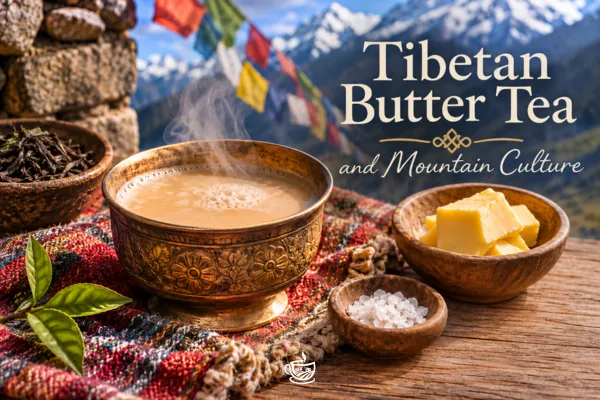
Tibetan Butter Tea and Mountain Culture
Explore Tibetan butter tea, a savory drink shaped by mountain life, hospitality, and the shared rhythm of daily meals.
Why this matters
Not every cup of tea asks for sugar, lemon, or a dainty biscuit. In Tibetan communities, butter tea—often called po cha in English-language accounts—is typically savory, warm, and closely woven into everyday hospitality. Strong tea, butter (traditionally from yak dairy in many settings), and salt are churned into a rich drink. It is a world away from a sweet latte, and that is precisely why it deserves to be understood on its own terms.
I teach tea in South Carolina, not Tibet, so this is an invitation to learn from Tibetan foodways—not a claim to speak for every Tibetan household.
What to know first
It is real tea. The base comes from Camellia sinensis, often prepared strong from compressed or dark tea according to local practice.
It is food as well as drink. Butter supplies richness and energy; salt contributes a savory note. Tea may accompany tsampa, roasted barley flour, and other daily foods.
It carries a welcome. Offering tea has social meaning in homes and communal spaces. Exact methods, ingredients, and etiquette vary by region and family.
When I pour tea for a visitor at Clemson Tea Farm, I think about more than brewing temperature. I think about how to welcome someone to the table. That common human question is a useful bridge; the traditions themselves are not interchangeable.
Nerdy tangent: why churn the butter?
Tea is mostly water and butter is mostly fat. Churning or vigorous blending disperses fat into tiny droplets, creating a temporary emulsion and a fuller mouthfeel. Modern blenders can imitate the physical mixing, but they do not reproduce the cultural knowledge embodied in a traditional household practice. A blender handles texture. It does not deliver context in the box.
How to explore butter tea respectfully
Start with the people.
Read Tibetan accounts and historical sources before collecting social-media recipes. Avoid treating a living tradition as an adventurous dare.Taste the tea base.
Brew a strong black or dark tea and notice its bitterness, body, and aroma before adding anything.Make a small home adaptation.
In a heat-safe blender, carefully combine a cup of hot strong tea with a little butter and a small pinch of salt. Vent the lid as directed for hot liquids. Adjust slowly. This is a learning exercise, not a claim of authenticity.Pair with a conversation.
Ask what the drink reveals about climate, food, trade, labor, and the act of offering refreshment.Write one sensory note.
Is the cup salty, creamy, tannic, warm, or brothy? Describe what you notice without ranking a culture by whether its flavors feel familiar.
Pro tip: Let the first sip surprise you. Then give the second sip enough quiet to teach you something.
A reflection from the farm
Growing Camellia sinensis reminds me that the same plant can travel through very different histories. Place does not merely change a tea's flavor. People shape what tea means at the table. Tibetan butter tea deserves to be approached with curiosity, care, and respect for the communities that sustain it.
Butter tea is a savory Tibetan tradition whose ingredients, hospitality, and meaning are shaped by place and people. Taste with curiosity; learn from the communities that keep the tradition alive.
Want to bring more farm-to-cup wellness into your life?
Download the free printable: Butter Tea Culture and Sensory Card. Print it, use it, and make the lesson your own.
Interested in the work behind the cup? Ask about Clemson Tea Farm classes and volunteering. Visits and volunteer activities are arranged in advance.
Wanna Read More?
Wanna Geek Out?
University of Texas teaching resource: Tea in Tibet and the Himalayas
European Bulletin of Himalayan Research: Eating, Remembering and Sustaining Tibetan Identity
#ClemsonTeaFarm #TeaLeavesAndLifeLessons #TibetanButterTea #ButterTea #TibetanTea #TeaCulture #CamelliaSinensis #TeaTraditions #TeaEducation #GardenToCup
© 2026 Clemson Tea Farm. All rights reserved.
