Water for Tea: Tap vs Filtered vs Spring — What Works?
Best water for tea? Compare tap, filtered, and spring water so Camellia sinensis tastes cleaner, brighter, and less bitter.
Why this matters
Water for tea is not just “the wet part.” It is the stage your Camellia sinensis leaves step onto. You can measure the leaf, warm the cup, and mind the timer, but if the water tastes like pipes, pool day, or chalk dust, your cup will tell on you.
At Clemson Tea Farm, we taste the whole story: soil → plant → harvest → brew → taste → ritual. Water pulls flavor from the leaf, carries aroma to your nose, and decides whether a cup feels bright, flat, smooth, or bossy.
If your tea tastes bitter, dull, or metallic, do not blame the leaf first. Check the water, then the kettle, then your steep time.
What is the best water for tea?
The best water for tea is fresh, clean, neutral-tasting water with moderate-to-low minerals. For most people, filtered tap water is the best everyday choice. Good spring water can also work beautifully, while chlorine-heavy tap water, very hard water, and totally flat distilled water can make tea taste dull or harsh.
In plain farm-table language: use water you would happily drink by itself, but not water so mineral-heavy it leaves crust in your kettle or so stripped-down your tea tastes sleepy.
Tap water: convenient, but opinionated
Tap water is usable when it tastes and smells clean. Public water is treated for safety, and that matters. But safe water is not always delicious water.
Chlorine, chloramine, old plumbing, and hardness can all show up in the cup. If hot tap water smells like a swimming pool, filter it before it meets your leaves. If brewed tea has a shiny film on top, your water may be hard; that film often comes from tea polyphenols interacting with minerals.
Tap works best for bold black teas and everyday mugs when it tastes clean. Watch for chlorine smell, metallic flavor, cloudy liquor, surface film, or muted aroma.
Filtered water: the dependable middle path
For most tea drinkers, filtered tap water is the easiest upgrade. It usually reduces taste and odor distractions without making the water lifeless. A simple, well-maintained carbon filter can make green tea taste brighter, black tea smoother, and your kettle less dramatic.
The trick is maintenance. Replace filters on schedule and choose one based on what your water actually needs.
Farm verdict: start here. Filtered water is usually the best balance of flavor, cost, and common sense.
Spring water: lovely, if it behaves
Spring water can be wonderful for tea, especially if your tap water is hard or chlorine-heavy. But “spring water” is not one flavor. Some brands are soft and clean. Others bring too much mineral personality to the mug.
A good spring water for tea should taste fresh, quiet, and balanced. If the brewed cup turns thick, chalky, flat, or sharp, the water may be too mineral-rich.
How to test your water for tea
1. Smell the water hot.
Heat a small amount and smell it before brewing. Chlorine, sulfur, metal, or stale pipe smells will likely show up in your cup.
2. Brew one tea three ways.
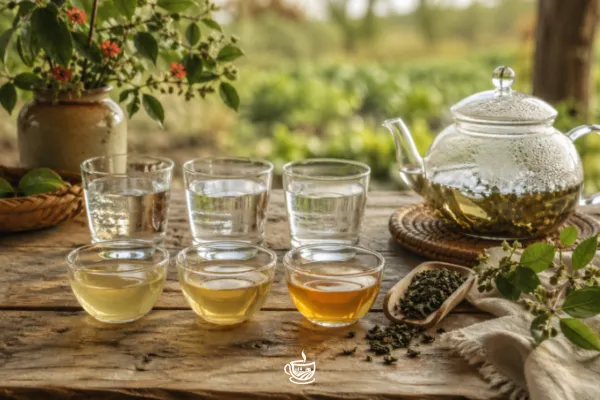
Use the same Camellia sinensis tea with tap, filtered, and spring water. Keep leaf amount, water temperature, and steep time the same. Need a starting scoop guide? See How Much Tea Leaf Should You Really Use?.
3. Taste before adding anything.
Sip each cup plain first. Notice aroma, bitterness, brightness, body, clarity, and aftertaste. Sweetener can hide trouble.
4. Choose the quietest water.
The best water is not the fanciest. It is the one that lets the leaf taste most like itself.
Visual teaching moment: quick water verdict
Tap water is convenient. Filtered tap water is the best everyday choice. Spring water can be lovely when balanced. Distilled water is often too flat unless minerals are added back. Very hard water usually makes tea taste dull and may leave film on the surface.
Pro tip: Do not use rain barrel water for brewing unless it has been properly treated and confirmed potable. Rainwater belongs beautifully in the garden plan; your mug deserves drinking water.
Reflection
Water teaches humility. We love fussing over the leaf, harvest, kettle, and cup. But the plain thing carries the whole story. Soil feeds the plant. The plant gives the harvest. The harvest waits for the brew. The brew opens into taste. Taste becomes ritual when we slow down enough to notice.
A better cup does not always require a new tea. Sometimes it only needs cleaner water, a calmer kettle, and five minutes of paying attention
Filtered tap water is the best everyday water for tea, but the real answer is this: use clean, fresh, neutral-tasting water that lets Camellia sinensis taste like itself.
Want to bring more farm-to-cup wellness into your life?
Download the printable PDF: Water for Tea Taste Test Card
Get notified for tea classes, volunteer days, or WWOOF opportunities:
Sign up through the Clemson Tea Farm contact page, or learn more about our farm host listing on WWOOF USA.
Wanna Read More?
Why Your Tea Tastes Bitter and How to Fix It
How Much Tea Leaf Should You Really Use? A Scoop Guide
Tea, Tisanes, and That Poor Confused Mug on Your Counter
Harvesting Rainwater with Permaculture in Mind
Browse the Clemson Tea Farm Blog
Wanna Geek Out?
Royal Society of Chemistry, Soft Matter — Tea film formation in artificial tap water
CDC — About Choosing Home Water Filters
